
Thank you for Subscribing to Environmental Business Review Weekly Brief


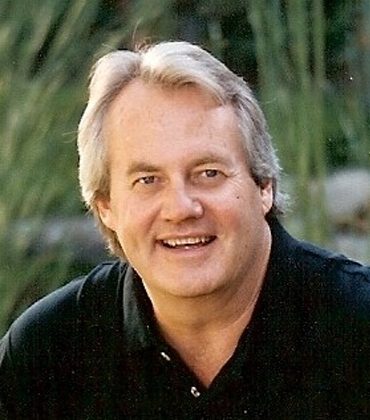 Ray L. McKim, CPL and ESA
A Phase I Environmental Site Assessment is intended to answer one fundamental question: Does a commercial property present environmental risks that could affect a real estate transaction? For lenders and buyers, the assessment provides critical due diligence, helping them make informed decisions before financing or acquiring a property. Yet when the same consultant who identifies potential concerns also stands to benefit from the more extensive investigations or remediation that may follow, questions about objectivity can arise.
Matador Environmental Professionals (MEP) was built around eliminating that specific conflict. The company specializes exclusively in Phase I Environmental Site Assessments for low-risk commercial properties and deliberately does not perform Phase II investigations or remediation.
By focusing solely on identifying legitimate environmental risks, MEP positions itself as an independent assessor with no financial incentive to recommend follow-on environmental work. For founder Ray L. McKim, CPL and ESA, that independence is fundamental to delivering practical, common-sense environmental due diligence that clients can trust.
The value of that approach became clear during an assessment of a small mechanic's shop. Preparing for a lender-required Phase I Environmental Site Assessment, the owner expected the inspection to uncover costly problems that would delay financing and jeopardize the business. Instead, Ray found a well-maintained property with no significant environmental concerns, reinforcing the confidence that comes from an objective assessment focused solely on identifying genuine environmental risks.
"The most important thing is that our recommendations are unbiased. If a property needs additional investigation, I'll recommend it because it's the right thing to do, not because it's work we'll be doing," he says.
That distinction has resonated with lenders and commercial property owners dealing with the kinds of properties that dominate the market. While environmental consulting often conjures images of refineries, chemical plants, or heavy industrial facilities, Ray's work is largely centered on office buildings, retail centers, convenience stores, equipment yards, and undeveloped land. These low-risk commercial properties account for the vast majority of lending transactions, yet he believes they are too often approached with a one-size-fits-all mindset.
-
My mission is to educate bankers and educate people. Common sense should always be part of environmental due diligence.
Experience has taught him that environmental due diligence is as much about understanding context as it is about identifying risk. One project that reinforced this principle involved a Class A office building in Amarillo, where two previous environmental assessments had raised concerns about a historic filling station once located on the site. A walk-through of the property revealed an extensive underground tunnel system beneath the building, making it immediately clear that any underground fuel tanks would have been visible.
For Ray, the experience reinforced a simple principle: Effective environmental due diligence depends on context as much as historical records. By combining firsthand observation with professional judgment, MEP helps clients distinguish genuine environmental risks from issues that needlessly complicate commercial transactions.
The approach is rooted in a broader mission that extends beyond completing reports. Throughout his career, Ray has become a trusted resource for bankers seeking clarity, borrowers trying to understand environmental requirements, and property owners navigating transactions for the first time. He sees education as an essential part of the profession because informed decisions begin with a clear understanding of actual risk rather than assumptions about what an environmental assessment might uncover.
"My mission is to educate bankers and educate people," he says. "Common sense should always be part of environmental due diligence."
Today, Ray is focused on expanding MEP's reach and passing on its philosophy. He is mentoring the next generation of environmental professionals, preparing young talent to carry forward the company's independent, common-sense approach while continuing to educate lenders and property owners across the industry.
Recognized as the Top Environmental Site Assessment Solutions for 2026, MEP demonstrates that rigorous due diligence does not have to come at the expense of practicality. By concentrating exclusively on Phase I Environmental Site Assessments, the company has built a model that reminds the industry of what environmental due diligence was always intended to achieve: helping clients make informed decisions with confidence rather than fear.
Environmental Due Diligence without Inflated Scope
A Phase I environmental site assessment can delay a commercial loan long before contamination is confirmed. The problem often begins when a minor site condition is treated as evidence of a larger liability, prompting extra testing that adds cost and gives lenders or purchasers little useful clarity. For executives managing acquisitions or property-backed credit, the central buying question is not whether a provider can produce a report. It is whether the provider can distinguish a material environmental concern from ordinary site conditions without weakening regulatory defensibility.
Scope discipline matters because environmental review can create its own financial exposure. Firms that perform both Phase I and follow-on investigation may have an economic interest in recommending more work. That structure does not make every finding suspect, but it should draw scrutiny from buyers. A provider should explain how it separates initial assessment from later testing and how potential conflicts are controlled. It should also clarify when outside specialists become necessary. Clear boundaries reduce the chance that a limited concern becomes an open-ended consulting engagement.
Judgment at the property level carries equal weight. Database records and historical maps are useful, yet they cannot replace a site visit interpreted in context. Older land uses may appear alarming on paper even when later construction or physical conditions make the suspected risk implausible. Conversely, leaking drums or poor waste handling may be visible before a formal review begins. Buyers should look for an assessor that connects records to current site evidence rather than treating every historical entry as a trigger for escalation.
Report design also affects transaction speed. Large document packages can create the appearance of rigor while burying the conclusion that lenders and deal teams actually need. A sound assessment should satisfy applicable inquiry standards and identify recognized environmental conditions without loading the file with irrelevant research. Material gaps should be explained plainly. Turnaround expectations and insurance coverage should be settled before work starts, along with lender acceptance. A cheaper report has little value if the financing institution rejects its format or requires the assessment to be repeated.
"Matador Environmental Professionals also works to deliver reports within a defined timeframe while avoiding databases that add cost without improving the conclusion."
Practical communication can prevent avoidable delays. When a correctable housekeeping issue is found before the report is completed, an assessor should be able to alert the client promptly and explain whether cleanup before final inspection is appropriate. Early notice gives the property owner a chance to address a visible concern before it becomes embedded in the transaction record. Buyers also benefit from contract language that prevents the Phase I provider from automatically receiving any Phase II assignment. That safeguard keeps later work subject to a separate decision.
Matador Environmental Professionals is a strong choice for buyers whose transactions involve low-risk commercial properties and require a focused Phase I ESA. It limits its core model to Phase I work and does not perform Phase II testing or remediation, removing a common source of financial conflict. Its process combines site inspection with targeted review of land and regulatory records. Direct communication follows when a correctable condition appears. Matador also works to deliver reports within a defined timeframe while avoiding databases that add cost without improving the conclusion. For lenders and property buyers that value independent judgment over expanded scope, that service model merits serious consideration.
...Read more
Environmental Site Assessment Solutions Info
Q1
What Do Environmental Site Assessment Solutions Cover in Commercial Property Due Diligence?
Environmental Site Assessment Solutions help buyers, lenders and property owners evaluate whether environmental conditions could affect a commercial real estate transaction. Environmental due diligence often begins with a Phase I review that combines site observation, historical research and regulatory information to identify conditions that may require closer attention. The goal is not to assume contamination, but to separate credible environmental concerns from routine site characteristics so decisions can be made with a clearer understanding of risk.
Q2
How Does Matador Environmental Professionals Approach Phase I Assessments?
Matador Environmental Professionals focuses its practice on Phase I Environmental Site Assessments for low-risk commercial properties. Its Environmental Site Assessment Solutions are structured around an independent assessment model: the company does not perform Phase II investigations or remediation, reducing the financial incentive to recommend additional work. Its work commonly involves properties such as office buildings, retail centers, convenience stores, equipment yards and undeveloped land, where practical interpretation can be important to transaction planning.
Q3
Why Does Independence Matter in Environmental Due Diligence?
As environmental due diligence can affect finance, purchase choices, and the extent of subsequent research, independence is important. Evaluation of Environmental Sites When findings are assessed according to their true significance rather than being viewed as automatic catalysts for further research, solutions are most helpful. Stakeholders can evaluate recommendations on technical merit while maintaining the Phase I review's goal of identifying pertinent environmental risk if there is a clear division between the initial assessment and follow-up services.
Q4
What Should Buyers and Lenders Look for in an Environmental Site Assessment?
Buyers and lenders should look for Environmental Site Assessment Solutions that combine records review with direct site evaluation and professional judgment. Historical information is valuable, but it needs to be interpreted in light of current property conditions. A useful assessment should explain material concerns clearly, distinguish them from less consequential observations and support timely decision-making. Report clarity, lender acceptance, appropriate scope and communication around visible issues can also affect how smoothly due diligence fits into a transaction.
Q5
How Does Matador Environmental Professionals Apply Context to Low-Risk Commercial Properties?
Matador Environmental Professionals uses field observation and contextual review to test whether historical concerns remain plausible at a property. Its Environmental Site Assessment Solutions emphasize judgment rather than relying on records alone. In one office-building assessment, a below-building tunnel system helped clarify why a historical filling-station concern was unlikely to indicate hidden tanks. In another review involving a mechanic's shop, the property was found to be well maintained without significant environmental concerns, allowing the assessment to remain proportionate to the conditions observed.
Q6
How Can Environmental Site Assessment Solutions Help Keep Transactions Focused?
Environmental Site Assessment Solutions can help keep transactions focused by identifying meaningful risks without expanding the scope unnecessarily. For low-risk commercial properties, that means connecting historical research, regulatory information and current site conditions before deciding whether further investigation is justified. When the assessment is disciplined, clearly communicated and aligned with the actual property context, stakeholders can address legitimate concerns while avoiding delays or added work based only on assumptions.
