
Environmental Site Assessment Solutions

Environmental site assessment solutions help property owners, developers and lenders evaluate contamination risks before land transactions or redevelopment. With a focus on field investigation, regulatory review, reporting accuracy and remediation insight, they support safer property decisions and stronger environmental due diligence.

Matador Environmental Professionals: Where Common Sense Meets Environmental Due Diligence
Matador Environmental Professionals
Where Common Sense Meets Environmental Due Diligence
Ray L. McKim, CPL and ESA
A Phase I Environmental Site Assessment is intended to answer one fundamental question: Does a commercial property present environmental risks that could affect a real estate transaction? For lenders and buyers, the assessment provides critical due diligence, helping them make informed decisions before financing or acquiring a property. Yet when the same consultant who identifies potential concerns also stands to benefit from the more extensive investigations or remediation that may follow, questions about objectivity can arise.

Integrating Digital Mapping and Data Analytics into Environmental Site Assessments

Environmental due diligence has moved beyond relying solely on site inspections and paper-based records. Today's projects require a more complete understanding of land conditions before development, redevelopment, or property transactions begin. Digital mapping and data analytics help environmental professionals evaluate risks with greater accuracy while bringing together historical records, field observations, geographic information and other data into a unified system. This integrated approach provides a clearer picture of site conditions and supports more informed decisions.

Environmental Due Diligence without Inflated Scope

A Phase I environmental site assessment can delay a commercial loan long before contamination is confirmed. The problem often begins when a minor site condition is treated as evidence of a larger liability, prompting extra testing that adds cost and gives lenders or purchasers little useful clarity. For executives managing acquisitions or property-backed credit, the central buying question is not whether a provider can produce a report. It is whether the provider can distinguish a material environmental concern from ordinary site conditions without weakening regulatory defensibility.

From Landfill To Leadership: Driving Sustainability In The Waste Industry
Casella Waste Systems, Inc
From Landfill To Leadership: Driving Sustainability In The Waste Industry
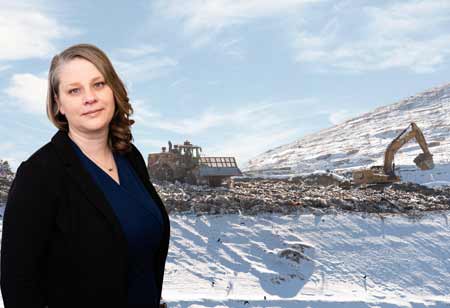
Amy Davies, P.E., Regional Environmental & Compliance Manager

Amy Davies, P.E., is Casella Waste Systems, Inc.’s Regional Environmental & Compliance Manager, overseeing compliance, permitting, construction, and remediation programs at 58 waste management facilities across Northern New York and Vermont. These include active and closed landfills, recycling, and composting facilities. A licensed professional engineer with a civil engineering degree from Clarkson University, she began her career at the Clinton County Landfill and has a deep commitment to community service. She serves as the Technical Program Coordinator for the Federation of New York Solid Waste Conference and volunteers with several local organizations.

Environmental Site Assessment Solutions Info

Q1
What Do Top Environmental Site Assessment Solutions Help Organizations Accomplish?
Environmental site assessment providers help organizations identify potential concerns connected to land, buildings and past property uses before transactions, financing or redevelopment. Top Environmental Site Assessment Solutions bring together records review, site observations, professional interpretation and clear reporting so decision-makers can understand possible environmental liabilities without treating every historical condition as a confirmed problem. The work supports environmental due diligence by giving buyers, lenders, owners, developers and other stakeholders a structured view of property-related environmental risk.
Q2
What Services Are Typically Part of Environmental Site Assessment Solutions?
The scope depends on the property, transaction and regulatory need. Top Environmental Site Assessment Solutions may cover historical research, regulatory database review, site reconnaissance, interviews, documentation of recognized concerns and recommendations for further investigation when warranted. Some engagements center on a Phase I environmental site assessment, while others may lead to sampling, testing or more specialized evaluation. Effective providers define the scope clearly, explain its limitations and present environmental due diligence findings in terms that both technical and nontechnical participants can understand.
Q3
Why Is Demand for Environmental Site Assessments Growing?
Real estate transactions, redevelopment activity, lender requirements, risk management and closer attention to environmental liabilities all support demand. Top Environmental Site Assessment Solutions become particularly relevant when stakeholders need to understand how previous property uses could affect financing, acquisition, redevelopment or future operations. Demand can also rise around older properties, changing land uses and projects with complex financing processes. Environmental site assessments give organizations a more disciplined way to examine potential concerns before those issues complicate a transaction or project.
Q4
How Should Organizations Evaluate Environmental Site Assessment Providers?
Technical qualifications matter, but they are only part of the decision. Organizations assessing Top Environmental Site Assessment Solutions may also look at property experience, scope discipline, report quality, turnaround expectations, communication, insurance and familiarity with applicable assessment standards. A strong property risk assessment should separate information that needs further attention from details that mainly require context. Decision-makers may also consider whether recommendations are clearly supported and whether reports work for lenders, investors, legal teams or internal reviewers.
Q5
How Do Environmental Site Assessment Solutions Create Business Value?
The practical value lies in finding and clarifying potential concerns before uncertainty becomes more expensive or disruptive. Top Environmental Site Assessment Solutions can help stakeholders identify possible liabilities earlier, determine whether additional investigation is justified, support financing discussions and reduce the chance of unexpected environmental issues after a transaction. Environmental due diligence can also help teams focus attention where it matters most. A well-executed property risk assessment does not remove uncertainty, but it can make environmental risk easier to understand and manage.
Q6
What Role Do Expertise and Technology Play in Environmental Site Assessments?
Digital tools can organize records, improve research efficiency, document site conditions and support more consistent reporting. Professional judgment still determines what that information means for a particular property. Top Environmental Site Assessment Solutions balance those tools with experienced interpretation, disciplined field observation and clear communication. Technology is most useful when it improves accuracy, traceability and turnaround without making the assessment process harder to follow. In environmental site assessments, expertise remains essential because maps, databases, historical records and site observations rarely explain themselves.