Thank you for Subscribing to Environmental Business Review Weekly Brief


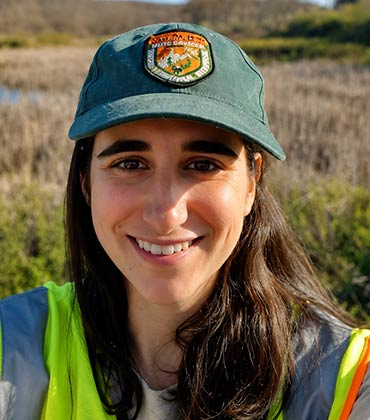 Jane Capozzelli, Owner, Bird Biologist and Forestry Specialist
Every property has different ecological conditions, and every landowner has different goals. Ecological restoration of private forestlands requires a customized approach built around the land condition, the species a landowner wants to support and the financial viability needed to sustain the work long term.
Bird Folk Forestry offers custom wildlife-focused habitat restoration plans designed specifically for private landowners. By combining conservation grant funding and on-ground forestry implementation, the company transforms historically logged forests into functioning ecosystems.
“Every acre counts,” says Jane Capozzelli, Owner, Bird Biologist and Forestry Specialist. “No matter how large the restoration project is, we are committed to making it happen.”
Driven by a passion for wildlife and habitat restoration, Capozzelli founded Bird Folk Forestry in West Virginia after leaving the United States Department of Agriculture (USDA). She took a federal buyout and invested her severance to launch the business.
Combining her background in conservation and bird biology, she designs species-specific restoration strategies for West Virginia's privately owned forests.
A Collaborative Approach to Habitat Restoration
A trained bird biologist, Capozzelli approaches restoration through the habitat requirements of specific wildlife species. Every plan is customized based on the property's conditions and the landowner's goals. Whether a client wants to support wood thrushes, woodpeckers or other priority species, restoration strategies are designed around what those animals need to thrive.
One of the company’s flagship conservation efforts focuses on the Cerulean Warbler, a declining species whose nesting habitat is concentrated in West Virginia. Nearly 70 percent of the remaining global population is found here. To support their ecological needs and recovery, Bird Folk Forestry developed specialized prescriptions. It also reverses decades of degradation. Many properties have undergone three or more logging cycles over the last hundred years, leaving behind dense and degraded forest stands that require extensive thinning and active management to restore ecological function.
To make restoration financially achievable, Bird Folk Forestry works with conservation partners, including the Appalachian Mountains Joint Venture, Natural Resources Conservation Service and the West Virginia Division of Forestry. Drawing on Capozzelli’s USDA experience and conservation grant-writing expertise, it secures USDA grant awards with a 90 percent success rate.
The Cerulean Warbler projects are fully grant-funded, without any out-of-pocket costs for landowners. This collaborative model reflects West Virginia’s strong conservation network and ecological significance.
-
Every acre counts. No matter how large the restoration project is, we are committed to making it happen.
At the same time, for specialized thinning and restoration work, Bird Folk Forestry hires underemployed local loggers, creating economic opportunities for the independent workforce. These experienced loggers perform high-precision thinning, improving forest health and the property’s overall quality.
One of Bird Folk Forestry’s notable projects demonstrates how restoration is built around individual landowner priorities. The project involved a 9.6 acre forest stand improvement plan for landowner John Cobb, combining selectively thinning overabundant red maple trees to support a healthier poplar ecosystem while preserving biodiversity and rare tree species. It also incorporated habitat creation for endangered bat species by converting selected trees into snags.
By aligning landowners’ objectives with state and federal conservation priorities, the project successfully balanced sustainable forestry and wildlife restoration.
Ecological Recovery through Carbon Solutions
Bird Folk Forestry aims to expand beyond habitat restoration into larger-scale ecological and carbon management initiatives. It is exploring the concept of ‘wood vaults,’ which store removed biomass from forest thinning projects in mines or clay pits to prevent carbon release through decomposition.
Bird Folk Forestry also sees potential in combining habitat restoration with mine remediation across West Virginia, where abandoned mines and degraded lands could support large-scale carbon storage. It also focuses on pollinator restoration projects requiring specialized equipment for larger sites.
By pairing ecological restoration with innovative carbon management, Bird Folk Forestry aims to create long-term environmental solutions for both forest health and climate-related challenges. Whether restoring 1,000 square feet or 550 acres, it maintains equal dedication to wildlife-focused restoration, reflecting its belief that every acre contributes to ecological recovery.
Habitat Restoration Requires More Than a Forestry Plan
Private-land habitat restoration often stalls long before the first thinning crew arrives. Property histories are incomplete, prior timber harvests have altered forest structure and landowners inherit acreage without a clear understanding of what ecological conditions existed before decades of extraction. Many restoration proposals fail at the point where biological goals meet cost reality. A retired farmer or family landowner may understand that habitat conditions have declined, yet restoring hundreds of acres requires specialized labor, site analysis and funding support that rarely fit within personal budgets.
“Bird Folk Forestry presents a practical option when the assignment requires individualized planning, grant-supported implementation and restoration work shaped around measurable wildlife objectives rather than a standard forestry template.”
That tension has become more visible across Appalachia. Forests that have been harvested repeatedly over long periods can develop dense stands dominated by species that suppress regeneration patterns needed by wildlife. Habitat work then becomes less about preservation and more about correction. The challenge is determining which interventions will improve ecological conditions without creating a new set of management problems several years later.
Executives evaluating habitat restoration providers should pay close attention to how restoration plans are built. Generic management templates often struggle on private land because ownership goals vary widely. One landowner may prioritize future timber value while another is focused on migratory birds. A restoration plan that ignores those differences can produce activity on the ground without producing the ecological conditions the property owner actually wants.
Wildlife specificity has become a meaningful dividing line. Habitat restoration increasingly depends on understanding the requirements of particular species rather than treating forests as uniform landscapes. Nesting conditions, canopy structure and forest composition can differ substantially between target species. Providers that can translate those biological requirements into practical forestry prescriptions tend to create plans that remain relevant after implementation begins.
Funding access has also become part of the evaluation process. Restoration projects frequently depend on conservation grants, cost-share programs and agency partnerships. Landowners often need assistance navigating those systems before any fieldwork can begin. Technical expertise alone does not solve the affordability problem. The ability to connect restoration planning with available conservation funding can determine whether a project moves forward or remains conceptual.
Another consideration is workforce execution. Habitat restoration at scale requires experienced crews capable of carrying out thinning work safely while preserving the conditions outlined in the management plan. Poor execution can undermine otherwise sound biological recommendations. Forest owners increasingly scrutinize the quality of field operations because restoration outcomes depend as much on implementation as planning.
Bird Folk Forestry aligns closely with those pressures. Its work centers on customized habitat restoration plans for private landowners, drawing heavily from species-focused forestry and bird biology. The firm develops forest management plans, habitat restoration projects and forest inventories while also helping clients pursue conservation funding opportunities. Its restoration work includes thinning, invasive vegetation management, pollinator habitat installation and wildlife-focused forestry prescriptions tied to specific ecological goals. The approach is particularly relevant for landowners managing bird habitat in West Virginia, including projects connected to cerulean warbler recovery efforts. For executives evaluating habitat restoration services, Bird Folk Forestry presents a practical option when the assignment requires individualized planning, grant-supported implementation and restoration work shaped around measurable wildlife objectives rather than a standard forestry template.
...Read more
Habitat Restoration Services Info
Q1
What Are Habitat Restoration Services, and Why Are They Important?
Habitat Restoration Services help restore ecosystems that have been altered by invasive species, habitat degradation or changing land use. These services may include vegetation management, native planting, soil recovery, wildlife monitoring and long-term stewardship to improve ecological function. Effective Habitat Restoration Services support healthier landscapes, strengthen biodiversity and create conditions that allow native wildlife to recover over time.
Q2
How Does Bird Folk Forestry Deliver Habitat Restoration Services?
Bird Folk Forestry approaches Habitat Restoration Services through practical restoration projects tailored to individual properties and conservation goals. Its work includes invasive brush and herb management, forest thinning, soil recovery, trail development and complex forest inventories. The company also develops wildlife population models, mapping and monitoring programs while helping property owners explore conservation grant opportunities that can support restoration efforts.
Q3
What Should Organizations Look for When Evaluating Habitat Restoration Services?
When comparing Habitat Restoration Services, organizations should look beyond planting activities alone. A comprehensive approach considers existing site conditions, long-term ecosystem health, invasive species control, monitoring and adaptive management. Restoration planning should be based on ecological assessments that guide practical actions and measure progress, helping ensure that improvements continue well after the initial restoration work is completed.
Q4
Which Projects Benefit Most From Habitat Restoration Services?
Habitat Restoration Services can benefit forests, agricultural land, community spaces and other landscapes where ecological conditions have declined. They are valuable when native habitats need recovery, wildlife movement has been disrupted or invasive vegetation limits ecosystem health. Restoration projects often combine multiple techniques so that vegetation, soil and wildlife habitats improve together rather than through isolated interventions.
Q5
How Does Bird Folk Forestry Support Long-Term Wildlife Recovery?
Bird Folk Forestry extends Habitat Restoration Services beyond site cleanup by focusing on lasting ecological outcomes. Its restoration work includes affordable wildlife habitat initiatives, pollinator projects, forest management planning and customized wildlife monitoring. By combining ecological fieldwork with mapping, inventories and data-driven wildlife assessments, it helps landowners make informed decisions that support habitat quality over the long term rather than providing one-time restoration activities.
Q6
How Do Habitat Restoration Services Create Long-Term Environmental Value?
Well-planned Habitat Restoration Services improve environmental resilience by restoring ecological processes instead of addressing only visible damage. As native vegetation becomes established and habitat quality improves, ecosystems become better able to support wildlife, protect soil and respond to future environmental pressures. Long-term planning, monitoring and maintenance are therefore essential components of Habitat Restoration Services, helping restoration investments deliver measurable ecological benefits over time.
Company : Bird Folk Forestry
ManagementJane Capozzelli, Owner, Bird Biologist and Forestry Specialist