Carbon Accounting Software in Europe

Carbon accounting software helps organizations measure emissions and manage climate reporting across business operations and supply chains. With a focus on data accuracy, compliance readiness, emissions visibility and reporting automation, it supports clearer sustainability management and more informed reduction planning.

Carbon+Alt+Delete: Carbon Accounting Software Built for Consultant-Led Climate Management
Carbon+Alt+Delete
Carbon Accounting Software Built for Consultant-Led Climate Management
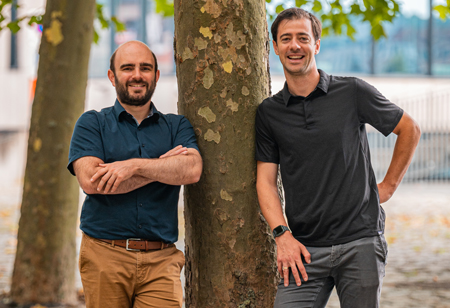
Hanspeter Hoschle, CTO, Kenneth Van den Bergh, CEO
AI is expanding what sustainability consultants and software can do, while policy changes are shrinking the group of companies legally forced to use those services. In response, sustainability consultants are increasingly helping clients move beyond compliance reporting toward carbon insight, risk conversations and reduction planning.

Empowering European Businesses with Carbon Accounting for a Greener Future

Modern European enterprises are increasingly aligning their operational strategies with structured environmental responsibility frameworks as regulatory expectations and investor priorities continue to evolve across multiple industries. Carbon accounting software has become a central instrument in this transformation, enabling organisations to measure, monitor, and manage greenhouse gas emissions with greater consistency and reliability.

From Reporting Obligation to Risk Intelligence in Carbon Accounting Software

Carbon accounting software in Europe has entered a phase where compliance alone no longer justifies investment. Regulatory momentum has softened in parts of the region, yet scrutiny from investors, supply chain partners and financial stakeholders has intensified. Executives are no longer measuring emissions simply to satisfy reporting mandates; they are doing so to understand exposure, anticipate financial implications and inform decision-making. This shift places new expectations on software platforms, which must translate emissions data into insight that can be used beyond sustainability teams.

Decarbonizing Transport and Logistics: A Practitioner's Reflection on Moving from Pilot Projects to Scalable Solutions
DSV - Global Transport and Logistics [CPH: DSV]
Decarbonizing Transport and Logistics: A Practitioner's Reflection on Moving from Pilot Projects to Scalable Solutions
Kenneth Riis Jensen, Vice President, Global Sustainability, Road division,

The transport and logistics industry stands at a crossroads. With global emissions targets quickly moving from distant goals to looming deadlines, the pace of decarbonization is accelerating—along with the urgency to reconsider our traditional ways of doing business. As a sector contributing significantly to global greenhouse gas emissions, the sense of urgency is undeniable. The time to act is now.

How Finance and Cost Pressures Are Changing Carbon Accounting Software Purchases

Thursday, July 02, 2026

Buying decisions for carbon accounting platforms in Europe are shifting. These choices are no longer handled by sustainability teams working alone. Finance departments are now more directly involved in vendor selection. This is happening because emissions data is starting to form part of broader reporting obligations. In practice, these obligations often overlap with financial disclosures. Cost scrutiny is playing a bigger role in these decisions. Teams are comparing software subscription costs with the effort needed to manage reporting using existing systems. Some organisations are also looking at platform fees alongside the work involved in pulling emissions data from procurement logs, travel records and supplier invoices. In many cases, the focus is less on total cost and more on how predictable the reporting process becomes. Vendor evaluation processes are shifting. Procurement teams are asking for clearer details on what data is being used and how corrections are handled when emissions factors change. The concern is how quickly regulatory updates or methodology shifts can impact reported numbers. As a result, tools that don’t clearly explain how recalculations work often take longer to get approved, even if they come with more features. Approval processes inside companies are also taking longer in some cases. Finance teams usually focus on how results fit into existing reporting systems, while sustainability teams are more concerned with whether emissions coverage is complete. That split often slows down final decisions when neither side fully owns the requirements. In response, software providers are starting to explain their calculation methods more clearly during demos. Another quiet shift is happening in renewal discussions. Companies that adopted carbon accounting tools early are now rethinking how much they actually use them after a few reporting cycles. Some are using fewer bundled advisory services and doing more of the data work in-house. A key shift is emerging in decision-making. What was once led mainly by sustainability teams is now increasingly shaped by finance teams, particularly around reporting consistency and cost control.

Data Fragmentation is Slowing Carbon Accounting Deployment Inside Enterprises

Thursday, July 02, 2026

Carbon accounting software rollouts across European companies are running into friction when emissions data needs to be gathered from several internal systems. The main challenge is not so much about the calculations themselves. Instead, it comes down to the condition of the data, which is often scattered across procurement, logistics and facilities management platforms. System integration is often uneven. Older procurement systems tend to store supplier data in formats that don’t work well with newer cloud finance platforms. That mismatch becomes visible later when emissions values are mapped to transactions, often leaving reporting teams to check entries one by one when automation fails. Scope-related data adds another layer of difficulty. Emissions linked to suppliers are not always easy to confirm because reporting standards can differ by region and by industry. Software tools use estimation models to fill in these gaps. In practice, those models need to be updated regularly as supplier data changes. A lot of companies are running into resource bottlenecks. Carbon accounting work often ends up with finance or compliance teams that are already busy. That makes reporting periods heavier, especially when multiple regulatory deadlines come together. Another issue is unclear ownership of emissions data. IT manages integration, finance focuses on reporting accuracy, and sustainability teams handle disclosures. This separation slows down updates across systems. The broader takeaway is the gap between what the software can do and how organisations are set up internally. Carbon accounting tools are able to handle large volumes of emissions data. In practice, progress depends on how quickly internal systems and responsibilities can be brought together into a single working process.

Compliance Pressure is Reshaping Demand for Carbon Accounting Tools in Europe

Thursday, July 02, 2026

Corporate reporting teams across Europe are adjusting how they work as emissions disclosure rules become more detailed and come around more often. Tasks that once lived comfortably in spreadsheets or were handled through occasional consultant support are now shifting into dedicated software systems. The need for carbon accounting tools is becoming most visible where companies have to track emissions across suppliers and facilities that all rely on different internal systems. Inside organizations, finance and sustainability teams are dealing with more fragmented information than before. Procurement records, energy bills and supplier declarations often sit in separate platforms that were never designed to connect cleanly. Carbon accounting software is increasingly being used to pull these scattered inputs into a single reporting structure. This is especially noticeable for companies that now report on a regular cycle rather than treating emissions disclosure as an annual exercise. Enterprise data structure is adding another layer of difficulty. Many mid-sized firms operate across multiple ERP systems, often as a result of acquisitions or regional expansion. That setup tends to create gaps in emissions calculations when the same type of activity is recorded differently across systems. In response, software providers are putting more focus on data mapping tools that can translate between systems instead of expecting companies to standardize everything at the source. Timing is proving difficult during rollout. Reporting deadlines are shrinking, but internal data cleanup is still incomplete in many organisations. As a result, companies are running manual validation and automated calculations at the same time. Sustainability teams are increasingly stepping into reconciliation tasks that previously belonged to finance teams. Buyers are asking different questions now. Instead of only looking at final emissions numbers, they want to understand how those numbers are calculated. This matters more when external assurance is required, and vendors are already changing how they explain their products in procurement talks. The bigger picture is a growing gap between reporting expectations and internal readiness. Carbon accounting tools are being used less as a finished product and more as infrastructure that has to sit on top of uneven and still-developing data systems.

Carbon Accounting Software in Europe Info

Q1
What Does Top Carbon Accounting Software in Europe Help Organizations Do?
Top Carbon Accounting Software in Europe helps organizations measure, organize and report greenhouse gas emissions across business activities. It brings together Scope 1, Scope 2 and Scope 3 data from energy use, travel, logistics, facilities, purchased goods and supplier activity. For many companies, the main value is replacing scattered spreadsheets with a clearer reporting structure.
Q2
What Features Are Usually Included in Carbon Accounting Platforms?
Carbon accounting platforms often include emissions factor libraries, automated data imports, dashboards, audit trails, supplier data tools, reduction planning and report exports. Top Carbon Accounting Software in Europe should also help teams document assumptions, flag missing data and review calculations before reports are shared. That matters when finance, sustainability and compliance teams all need confidence in the same numbers.
Q3
Why Is Demand Growing for Carbon Accounting Software in Europe?
Demand is growing as European organizations face stronger climate disclosure expectations, investor questions, customer requirements and supply-chain reporting pressure. Manual reporting can break down when data comes from multiple countries, facilities and vendors. Top Carbon Accounting Software in Europe helps companies handle this complexity while making emissions reporting more repeatable from one reporting cycle to the next.
Q4
How Should Decision-Makers Evaluate Carbon Accounting Software Providers?
Decision-makers should test carbon accounting software providers with a realistic reporting case, not only a sales demo. Upload utility bills, travel records and supplier data, then check whether the platform explains how emissions are calculated. Top Carbon Accounting Software in Europe should be transparent, easy to review and flexible enough to support changing reporting needs.
Q5
What Business Value Can Carbon Accounting Software Create?
Carbon accounting software gives leadership teams a clearer view of emissions exposure, reporting gaps and reduction opportunities. It can reduce manual work, improve audit readiness and help teams compare the impact of different climate actions. Top Carbon Accounting Software in Europe can also support procurement conversations when suppliers are asked for better emissions data.
Q6
What Role Do Technology and Expertise Play in Carbon Accounting Software?
Technology speeds up data collection, calculation and reporting, but expertise still matters. Emissions factors, reporting boundaries, supplier estimates and data quality rules require careful review. Top Carbon Accounting Software in Europe combines automation, traceable calculations and expert-friendly workflows so teams can move faster without losing control over the reporting process.