Thank you for Subscribing to Environmental Business Review Weekly Brief

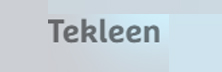
 Nagui Elyas, Chief Executive Officer
Maintaining reliable water systems has become increasingly important as industries face varying water quality conditions, rising maintenance costs and growing demands for uninterrupted production.
Tekleen Automatic Filters has spent more than four decades addressing these challenges by designing filtration solutions around each customer’s water source, operating environment and performance objectives rather than offering standardized equipment.
“What differentiates Tekleen is that we engineer solutions rather than simply supplying filters,” says Nagui Elyas, chief executive officer.
Designing Filtration for Long-Term Reliability
Tekleen’s approach begins with recognizing that every facility presents different water characteristics, flow requirements and operating conditions. Instead of applying a one-size-fits-all model, it engineers each automatic self-cleaning filtration system according to the specific application.
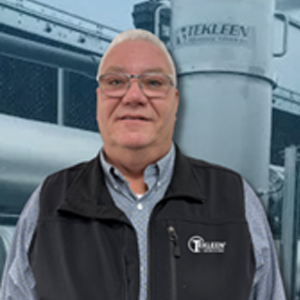 Dan F. Flanick, Chief Revenue Officer
Many facilities experience problems originating from the water source itself. Whether water is drawn from rivers, wells, municipal supplies or recycled process systems, suspended solids can accumulate and reduce equipment performance. The resulting issues often include clogged spray nozzles, fouled heat exchangers, blocked irrigation emitters, higher maintenance demands, increased energy consumption and unplanned downtime.
“Our role is to understand each application’s operating conditions and engineer a filtration solution that consistently removes suspended solids before they create problems,” says Dan F. Flanick, chief revenue officer.
Focusing on Lifecycle Performance
Every Tekleen installation begins with a detailed evaluation of water quality, suspended solids, flow rates and system conditions to determine the most effective filtration strategy. Once commissioned, the filter monitors differential pressure as debris collects on its stainless-steel screen.
When the preset pressure level is reached, the system automatically initiates a backwash cycle. A high-velocity suction scanner cleans the screen in less than ten seconds while filtration and water flow continue uninterrupted throughout the backwash cycle.
It also emphasizes the Lifelong Cost of Operation (LCO). Rather than evaluating equipment solely on purchase price, Tekleen focuses on the long-term financial impact of maintenance, replacement costs and system reliability. Stainless-steel construction, simplified annual maintenance kits and proven engineering enable operating lives that frequently exceed 20 years while reducing lifecycle expenses.
-
What differentiates Tekleen is that we engineer solutions rather than simply supplying filters.
A steel manufacturing facility in Birmingham, Alabama, illustrates this philosophy. Suspended solids and mill scale circulating through the cooling water system repeatedly clogged spray nozzles and affected production reliability. After evaluating the site’s requirements, Tekleen engineered a filtration system designed specifically to handle the heavy particulate loading while maintaining consistent cooling water quality.
Following installation, nozzle clogging was eliminated, maintenance requirements declined significantly, and cooling system reliability improved. The project also enhanced production efficiency while protecting downstream equipment, demonstrating the value of matching filtration design to the customer’s actual process.
Supporting the Future of Water Management
Tekleen expects water management priorities to continue evolving as industries place greater emphasis on sustainability, automation and resource efficiency. Growing investment in water reuse, increased automation within water infrastructure and rising demand for dependable cooling and process water systems are expanding the role of advanced filtration across manufacturing, energy and AI-driven data centers.
It is extending its engineering expertise into additional applications, including heavy mining, commercial vehicle wash systems, advanced cooling water loops and industrial water reuse. Supported by regional assembly capabilities, engineering partners and an international sales network, Tekleen continues helping customers improve system reliability, reduce lifecycle costs, conserve water and maximize the long-term value of their water infrastructure.
Setting the Standard for Self-Cleaning Water Filtration
Water filtration failures rarely remain confined to the filter itself. Suspended solids can clog spray nozzles, foul heat exchangers, block irrigation emitters and restrict cooling loops. The resulting pressure loss, maintenance calls and process interruptions affect production schedules, energy use and equipment life. Executives evaluating automatic selfcleaning water filtration should therefore look beyond nominal screen ratings or purchase price. The stronger decision is based on how well a system handles the actual water source, maintains flow during cleaning and controls cost over years of service.
Water quality varies significantly between rivers, wells, municipal supplies and recycled process streams. Particle size alone does not describe the challenge. Solids concentration, load fluctuation, organic matter, system pressure and flow demand all influence filtration performance. A suitable solution should begin with application analysis rather than a standard equipment recommendation. Buyers need evidence that the supplier can match screen selection, cleaning method, vessel configuration and materials to the source water and the equipment being protected. Poorly matched filtration may work under normal conditions yet struggle during seasonal changes or sudden increases in debris.
Cleaning behavior is equally important. Manual filters transfer the burden to maintenance teams and require scheduled shutdowns or bypass arrangements. Automatic systems reduce that dependency, but automation by itself is not enough. Decisionmakers should examine what triggers the cleaning cycle, how quickly debris is removed, how much water is discharged and whether filtration continues during backwash. A filter that interrupts flow may create unacceptable risk in cooling, irrigation or process-water systems. Excessive pressure loss can also increase pumping demand and weaken performance elsewhere in the network.
"Annual maintenance kits, spare-parts support and long service life further align the offering with lifecycle cost control, making Automatic Filters a well-supported choice for industrial, municipal, commercial and irrigation systems."
Lifecycle economics should carry more weight than initial price. Replacement screens, labor, backwash water, spare parts, service access and unplanned downtime can outweigh the original purchase cost. Buyers should ask how often routine maintenance is required, whether wear parts are standardized and how quickly technical support can respond. Construction quality also matters where systems face corrosive water, elevated temperature or sustained pressure. The preferred system should offer a clear maintenance path and remain practical to service after installation rather than relying on specialized intervention for ordinary upkeep.
Integration deserves the same scrutiny. Existing facilities may have limited space, low inlet pressure or variable flows. Filtration should fit these conditions without forcing a costly redesign of the surrounding water system. Product range, control compatibility and scalable configurations help buyers avoid compromising performance to fit a single model. The strongest supplier will treat filtration as part of the wider water circuit, not as an isolated component.
Tekleen Automatic Filter is a strong recommendation for organizations that need application-specific, self-cleaning filtration. Its Tekleen systems are engineered around water source, solids load, flow and pressure rather than a fixed design. Differential pressure initiates a suction-scanner backwash that cleans the stainless-steel screen in under ten seconds while water continues to flow. The ABW, LPF and MTF lines extend that approach across high-demand, low-pressure and low-flow applications. Annual maintenance kits, spare-parts support and long service life further align the offering with lifecycle cost control, making Tekleen Automatic Filter a well-supported choice for industrial, municipal, commercial and irrigation systems.
...Read more
Company : Tekleen Automatic Filters
ManagementNagui Elyas, Chief Executive Officer
Dan F. Flanick, Chief Revenue Officer