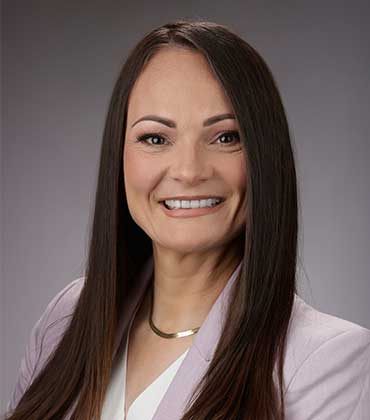
Tatiana Costa
Compliance Culture BuilderTatiana Costa brings more than two decades of experience in Environmental Health and Safety (EHS) in the food and beverage manufacturing industry. As director of environmental health and safety at Shehadey Family Foods, she leads compliance and safety programs across manufacturing facilities and distribution centers. Her contributions to advancing safety, compliance and sustainability in complex industrial environments have earned her recognition among top EHS leaders.
A Commitment to Nourish Lives
We live by the motto “nourishing lives one at a time.” That is our purpose.
Our core values are grounded in treating people the way we want to be treated and in doing things the right way the first time. Just as importantly, we believe in honoring our commitments and striving to improve every day. As leaders, our responsibility is to continuously embed these values across the organization.
For me, that foundation shapes everything I do in environmental health and safety (EHS).
A Career Shaped by Opportunity and Perspective
My journey into EHS can be described as an opportunity that found me at the right moment. In the early 2000s, when EHS was not as widely recognized as it is today, a mentor encouraged me to step into an administrator role in that field. That single decision set the course for my career. More than two decades later, I still report to that same mentor.
EHS is one of the last lines of defense in protecting people and the organization, capable of influencing outcomes at the highest level.
Earlier in my career, I focused primarily on site-level execution, ensuring compliance, managing incidents and supporting teams. I progressed from administrator to regional manager and eventually to director over the years.
Stepping into a director role significantly expanded my perspective. I began to see the broader impact of safety decisions, particularly their financial implications and long-term influence on the business. This shift reinforced for me that EHS is one of the last lines of defense in protecting people and the organization, capable of influencing outcomes at the highest level.
Navigating the Complexity of Multi-Site Compliance
Today, I oversee compliance across multiple manufacturing facilities and distribution centers operating in different states. Each location brings its own regulatory nuances, which means compliance is never a one-size-fits-all approach.
My role is to ensure alignment of our foundational programs with federal standards such as OSHA, EPA and HazMat/DOT requirements and also state-specific regulations that can vary significantly.
However, compliance alone is not enough. It must be supported by accountability at every level. Leadership defines expectations, supervisors reinforce them, and employees execute them. To sustain this, we rely on robust training systems, routine audits and detailed documentation that keep us audit-ready at all times.
We also monitor KPIs such as TRIR, CSA scores and environmental metrics to measure program effectiveness and drive continuous improvement. More importantly, we use incident investigations and root cause analysis to prevent recurrence while strengthening our overall system.
The goal is to create a culture where safety and compliance are part of daily operations, ensuring we protect our employees, the environment and the communities we serve.
Building a Safety Culture that Goes Beyond Compliance
Early in my career, I realized that no amount of policies or procedures can replace a strong safety culture. In high-risk environments like food manufacturing, culture determines whether safety practices are followed consistently or only when someone is watching.
For me, culture begins with involvement. Our training programs are designed to be hands-on and interactive, encouraging active participation from the employees. Feedback from them plays a critical role, but what matters even more is following up on their suggestions. When employees see that their input leads to real change in the training programs, engagement naturally increases.
We also focus heavily on inclusivity. Our workforce is diverse, with varying language skills and cultural perspectives. To bridge these gaps, we use visual aids such as simple infographics and color-coded symbols for high-risk tasks or lockout/tagout to bypass language barriers, making safety accessible to everyone.
Equally important is creating psychological safety. Employees must feel comfortable reporting hazards or nearmisses without fear of blame. When reporting is met with appreciation rather than punishment, it becomes a powerful tool for prevention.
Empowering Ownership on the Frontline
One of the most impactful shifts we have made is moving from a management-driven approach to a shared ownership model, which is key to sustainability in high-risk environments.
We have implemented initiatives such as Stop Work Authority, where every employee, regardless of role or tenure, has the right and responsibility to halt unsafe work without fear of retaliation.
Another key element is involving employees directly in risk assessments. Those closest to the work often have the deepest understanding of its risks, and their insights are invaluable in developing effective safety measures.
A robust reporting system is a major highlight. It ensures that even minor injuries are immediately reported for swift medical care and litigation prevention. Inclusive return-to-work programs further keep injured workers connected to the team.
Turning Data into Engagement and Action
To support this culture, we have invested in systems that make safety visible and measurable.
One initiative I am particularly proud of is our behavior-based safety program, which uses our EHS platform for peer-to-peer observations. These interactions focus on reinforcing safe behaviors. Over time, this has significantly reduced incidents and strengthened accountability and collaboration among team members.
"The goal is to create a culture where safety and compliance are part of daily operations, ensuring we protect our employees, the environment and the communities we serve."
We have also shifted our focus from lagging indicators to leading indicators through our real-time dashboard. Metrics such as near-miss reporting, training participation and corrective action timelines provide a more proactive view of safety performance. When teams can see these trends in real time, engagement naturally increases.
Another transformative initiative has been our workers’ compensation transparency program. Sharing data on injury types, costs, insurance renewal projections, preventability and EMR impact with leadership creates a deeper understanding of the financial and operational impact of safety.
Embracing Technology in Tune with the Human Factor
Technology has become an essential enabler of modern EHS practices. From electronic reporting systems to video-based interactive training platforms, digital tools have made safety more accessible and efficient.
I see significant potential in artificial intelligence. One area I am particularly interested in is the ability to use AI to identify hazards through images, capturing risks that might otherwise be overlooked.
However, I also believe in maintaining a balance between technology adoption and the human element. Even as we adopt new tools, the focus must remain on people. It is wise to remember that even in an increasingly automated world, it is individuals who operate systems, make decisions and drive outcomes.
The Evolving Role of EHS Leadership
As regulations become more complex and technologies continue to evolve, the role of EHS leaders is also changing. Automation and AI will reduce the burden of routine tasks, allowing leaders to focus more on strategy, culture and long-term improvement.
But no matter how advanced our tools, the fundamentals of mutual trust and alignment will remain the same. Leaders must ensure they are on the same path as their teams, with clear expectations and shared goals.