Thank you for Subscribing to Environmental Business Review Weekly Brief

Novelis
Serge Gaudin, Director Automotive Operations, Sierre&Nachterstedt
Recycling -The True Pathway Towards a Circular Aluminium Industry
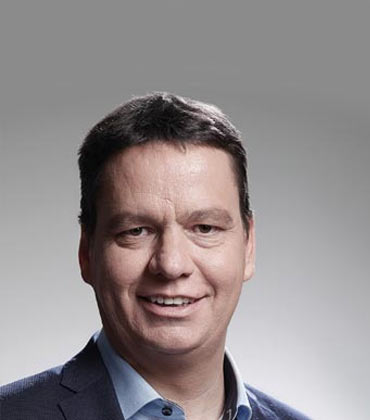
Serge Gaudin
The Paris Climate Agreement has set a clear goal: to mitigate climate change, the global temperature increase needs to be limited in the long term to a maximum of 1.5 °Celsius compared to pre-industrial levels. The aluminium industry, with an average emission of 1.1 billion tonnes of CO2e per year, currently contributes to 2 percent of global emissions. To reach carbon neutrality, the industry needs to reduce its CO2 emissions by 80 percent by 2050—a challenge that cannot be tackled individually, but requires the commitment of the industry as a whole and along its entire supply chain.
As over 90 percent of the aluminium industry’s CO2 emissions occur at the level of primary material extraction and production (bauxite mining, transportation, alumina refining and smelting), decarbonizing the primary production processes is a necessary step towards decarbonizing the industry. However, this will not be enough. The aluminium industry must contribute much more. With 75 percent of the material ever produced still being in use today, aluminium is a role model for circularity and as such a real driver for decarbonization. According to the Circularity Gap Report issued by Circle Economy, the world is only 8.6 percent circular. At 33 percent circularity, the aluminium industry is already much better than that. However, to reach carbon neutrality, the aluminium industry must become at least 50 percent circular. Because aluminium can be recycled again and again without losing its properties, the way to reach a carbon neutral aluminium industry is to reuse the material already available. To do that, we must maximize the quantity and quality of aluminium available for recycling and increase the amount of recycled content used to create low-carbon products. Aluminium is the perfect material for a circular economy. It is used for a vast range of products: from food and beverage packaging, electronic devices and construction, to next-generation mobility solutions. Aluminium is also lighter than other metals, which reduces emissions through improved fuel efficiency in traditional vehicles, and also offers increased battery range for electric vehicles. Most importantly, recycling aluminium only requires 5 percent of the energy needed to produce primary aluminium – making recycled aluminium the key enabler to decarbonizing the industry.With 75 percent of the material ever produced still being in use today, aluminium is a role model for circularity and as such a real driver for decarbonization.
-31.jpg) Take the example of the aluminium in cars. With the current processes for recycling end-of-life vehicles, cars often end up in shredding plants where they are pressed into bales of mixed materials. This often results in the scrap aluminium being redirected to lower grade uses than the original materials were designed for. The aluminium sector has just started to recover valuable automotive scrap at a quality level that retains the best value for its next life. Novelis is leading this movement among aluminium recyclers, having created the first and largest closed-loop recycling systems for automotive aluminium. This collaboration between Jaguar Land Rover (JRL) and Novelis introduced in 2015 resulted to a recovery of 50,000 tons of aluminium scrap back into the JLR's production process and continues to this day.
To increase the circularity of aluminium, we have to work on better collection and sorting processes in order to ensure all available scrap is transformed back into products of similarly high value again and again. But that won’t be enough. We also need to innovate the recycling process itself. In Europe alone, Novelis operates 6 research, development and customer solution centres to develop new alloys with lower carbon emissions and enhance circular product systems, eliminate losses and waste. Within the production process, Novelis is constantly looking for ways to reduce water consumption and energy intensity—as well as shifting towards renewable energy sources.
As a sustainability frontrunner and the world’s largest recycler of aluminium, Novelis is constantly looking for ways to advance the recycling process. Novelis works closely with its customers and partners along the value chain to create alloys with an even higher amount of recycled content, to design products where the aluminium can be segregated at the end of the product’s life and brought back to the circular economy, and on increasing the recyclability of our alloys for products of similarly high value. However, we cannot do it on our own—to achieve the systemic change that is needed to make the aluminium industry 50 percent circular, we seek to partner with industry players across the entire supply chain, across sectors, and with governments to establish a framework that will enable a fully circular economy. Only together can we increase the recycling of aluminium, which will play a major contribution towards decarbonizing the aluminium—and metal—industry.
Take the example of the aluminium in cars. With the current processes for recycling end-of-life vehicles, cars often end up in shredding plants where they are pressed into bales of mixed materials. This often results in the scrap aluminium being redirected to lower grade uses than the original materials were designed for. The aluminium sector has just started to recover valuable automotive scrap at a quality level that retains the best value for its next life. Novelis is leading this movement among aluminium recyclers, having created the first and largest closed-loop recycling systems for automotive aluminium. This collaboration between Jaguar Land Rover (JRL) and Novelis introduced in 2015 resulted to a recovery of 50,000 tons of aluminium scrap back into the JLR's production process and continues to this day.
To increase the circularity of aluminium, we have to work on better collection and sorting processes in order to ensure all available scrap is transformed back into products of similarly high value again and again. But that won’t be enough. We also need to innovate the recycling process itself. In Europe alone, Novelis operates 6 research, development and customer solution centres to develop new alloys with lower carbon emissions and enhance circular product systems, eliminate losses and waste. Within the production process, Novelis is constantly looking for ways to reduce water consumption and energy intensity—as well as shifting towards renewable energy sources.
As a sustainability frontrunner and the world’s largest recycler of aluminium, Novelis is constantly looking for ways to advance the recycling process. Novelis works closely with its customers and partners along the value chain to create alloys with an even higher amount of recycled content, to design products where the aluminium can be segregated at the end of the product’s life and brought back to the circular economy, and on increasing the recyclability of our alloys for products of similarly high value. However, we cannot do it on our own—to achieve the systemic change that is needed to make the aluminium industry 50 percent circular, we seek to partner with industry players across the entire supply chain, across sectors, and with governments to establish a framework that will enable a fully circular economy. Only together can we increase the recycling of aluminium, which will play a major contribution towards decarbonizing the aluminium—and metal—industry.
The articles from these contributors are based on their personal expertise and viewpoints, and do not necessarily reflect the opinions of their employers or affiliated organizations.
