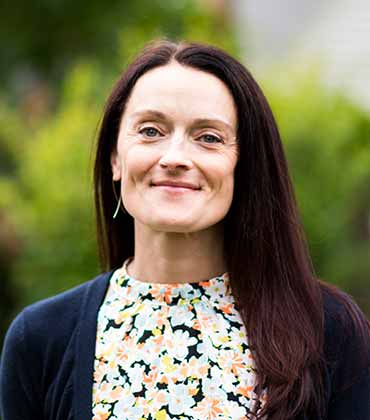
Melissa McMahon
In an interview with Environmental Business Review, Melissa McMahon, Environment, Health and Safety Director at JX Truck Center, discusses how EHS leadership is evolving beyond compliance into a strategic function that drives organizational resilience, cultural transformation and long-term sustainability.
Melissa McMahon serves as Environment, Health and Safety Director at JX Truck Center, overseeing safety programs across 28 locations spanning four states and a workforce of over 1,200 employees. With a professional background that includes regulatory compliance, auditing, consulting, and operational leadership, she brings a well-rounded perspective to EHS management.
My Journey into EHS Leadership
My career in EHS has been shaped by a steady evolution from technical expertise to organizational leadership. I began by building a strong foundation in regulatory affairs and auditing, serving as an EPA Compliance Analyst and Senior Auditor for CNH Industrial. These early experiences sharpened my ability to interpret complex regulations and translate them into actionable systems within organizations.
A defining moment in my journey came during my time as an EHS Manager at SRC Electrical, where I transitioned from compliance-focused work into true leadership. I was responsible for overseeing safety committees and managing EHS systems across multiple businesses. During the pandemic, I had the opportunity to lead critical initiatives to establish safe, compliant work environments in manufacturing settings. It was one of the most challenging periods of my career, but also one of the most rewarding.
My experience as a Safety Consultant, where I provided technical guidance to clients across diverse industries, further broadened my perspective. This consulting background proved to be the key to success when I joined JX Truck Center. When I stepped into my current role, the company was undergoing rapid expansion, growing to 28 locations across four states with a workforce of over 1,200 employees. The challenge was not just scaling safety operations but reimagining them to support a dynamic, fast-growing organization.
The Principles That Guide My Leadership
At the core of my approach to EHS leadership is a simple belief: safety is not a department but a shared cultural value. This philosophy has guided my decisions and shaped how we approach safety across JX Truck Center.
Leading by example is foundational. A safety culture cannot be built from behind a desk. It requires visibility, accountability, and consistency from leadership at every level. Equally important is empowerment through education. Through training, mentoring, and team-building initiatives, safety becomes something employees actively participate in rather than something imposed on them. By empowering employees and “Safety Champions” with the specific knowledge they need, we shift the dynamic from “policing” to “proactive ownership.”
Simplicity and accessibility are also critical. Overly complex systems often create barriers rather than solutions. My focus has been on developing structured yet easy-to-use processes that enhance tracking and accountability without overwhelming teams with administrative burdens.
Transparency plays a key role in driving cultural change. When employees understand the “why” behind safety initiatives, they are far more likely to support and sustain them. Open communication fosters trust, encourages feedback, and creates a sense of shared responsibility.
Finally, patience is essential. Culture does not change overnight. It requires consistency, persistence, and a willingness to meet people where they are.
Safety is not a department. It is a shared cultural value that must be modeled, communicated, and owned at every level of the organization.
Overcoming Challenges at Scale
One of the most significant challenges I encountered at JX Truck Center was managing safety across a geographically dispersed organization during a period of rapid growth. With 28 locations spread across multiple states, traditional centralized approaches were no longer effective.
To address this, I implemented a decentralized “Safety Champion” model. By identifying and empowering individuals at each site, we created a network of local leaders who serve as the eyes and ears of our safety program. These champions understand the unique needs of their facilities and can respond in real time, making safety more agile and responsive.
In parallel, I led a comprehensive revitalization of our safety systems. Drawing on my background in auditing and process improvement, I replaced fragmented legacy processes with a unified, user-friendly system designed to enhance tracking, reporting, and accountability.
Securing cultural buy-in was another critical component. Transitioning from a consultant mindset to an internal leadership role required building trust across all levels of the organization. Through clear communication and consistent engagement, we demonstrated that our initiatives were not about checking boxes but about protecting people and enabling long-term success.
Standardization across multiple states presented its own complexities, given varying regulatory requirements. By developing a flexible yet consistent framework, we ensured compliance while allowing for local adaptation where necessary.
The result has been a meaningful shift in our safety culture from reactive compliance to proactive ownership.
The Future of EHS Leadership
Looking ahead, I see EHS leadership evolving into a core driver of organizational resilience and corporate strategy. The role is expanding beyond traditional safety metrics to encompass sustainability, digital transformation, and proactive risk management.
Sustainability will become increasingly integrated into EHS responsibilities. Leaders will play a key role in driving initiatives related to waste reduction, energy efficiency, and broader ESG goals.
Digital monitoring is another area of rapid transformation. The ability to leverage real-time data allows organizations to move from reactive to predictive safety models. Instead of focusing solely on incidents that have already occurred, we can identify risks before they materialize. This shift requires leadership with strong analytical capabilities and the ability to translate data into actionable insights.
Risk management will also become more dynamic. As industries evolve with advancements such as electric vehicles and automation, new risks will emerge. EHS leaders must adopt a forward-looking approach, using strategic thinking and creative problem-solving to navigate an increasingly complex landscape.
Despite these technological advancements, the human element will remain at the heart of EHS. Culture, communication, and leadership will continue to define success. Technology should enhance human decision-making, not replace it.
Advice for Emerging EHS Leaders
For those aspiring to build a career in EHS, my advice is rooted in both experience and reflection.
Prioritizing human connection is the first step. Technical expertise is important, but your ability to communicate, influence, and build relationships will ultimately define your impact. You must be able to translate complex regulations into language that resonates across all levels of an organization.
Equally important is maintaining a mindset of continuous learning. The EHS landscape is constantly evolving, and staying curious is essential. Seek opportunities for professional development, mentorship, and collaboration.
While compliance is the baseline, true success lies in creating an environment where safety is valued intrinsically. This requires patience, consistency, and a genuine commitment to leading by example.
It is also essential to embrace practical, real-world solutions. Effective safety programs are those that work seamlessly within daily operations. Strive to create systems that empower employees rather than burden them.
Finally, build a network of champions. You cannot be everywhere at once, especially in large organizations. Empowering others to lead within their own teams is the key to scalable and sustainable success.
At JX Truck Center, my focus is to build a culture where safety is not just a priority but a shared value embedded in everything we do. By combining strong systems with empowered people and a long-term vision, we are not only meeting today’s challenges but also preparing for the future.