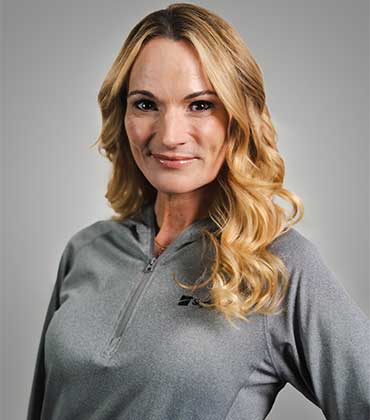
Kimberly Elliott
Environmental Stewardship AdvocateKimberly Elliott is the Head of Environmental Health & Safety (EHS) at Skydio, an autonomous drone company serving public safety, defense and industrial operations. With 22 years of experience spanning healthcare, emergency response, manufacturing and advanced technology environments, she has developed a multidisciplinary approach to EHS leadership grounded in compliance, workforce protection and continuous learning. A Certified Safety & Health Official (CSHO), Elliott is recognized for advancing workforce safety and EHS education across complex operational settings.
From Clinical Practice to Enterprise Risk Leadership
My entry into EHS followed an unconventional professional arc, but each stage prepared me for the discipline in a different way. My early career included clinical environments associated with Stanford Hospital, where patient care demanded procedural discipline, situational awareness and real-time judgment. A family background in first response and fire science further sharpened my understanding of emergency readiness, hazard recognition and the human consequences of unmanaged risk.
My path into EHS became clearer as I assumed increasing responsibility for regulatory compliance obligations and OSHA recordkeeping. What initially began as managing documentation, reporting requirements, and compliance expectations quickly evolved into a deeper appreciation for the broader purpose behind those systems. I found myself drawn to the intersection of operational safety, risk management, and regulatory strategy. OSHA recordkeeping, in particular, provided a unique lens into workplace trends, injury prevention, and organizational accountability. As I expanded my understanding of compliance programs and safety management systems, EHS became less about regulations and more about protecting people, strengthening operations, and building resilient organizations.
My perspective expanded when I transitioned into manufacturing, including my experience at Tesla. In that environment, compliance, OSHA recordkeeping, occupational safety, emergency response and fire/life safety are all connected with day-to-day operations. That large-organization experience also shaped how I now build EHS in a rapidly scaling startup environment, where the opportunity is not to correct legacy systems, but to design practical frameworks from the ground up before the business outpaces them.
Sustainable performance requires ownership across the organization.
It also shaped how I mentor teams. The profession includes more than 21 subsections, from industrial hygiene and hazardous waste to construction safety, medical operations and EPA-related compliance. I encourage EHS professionals to understand how these areas connect, because stronger decisions come from seeing the full operational picture rather than managing each risk in isolation.
The Career Backpack as a Leadership Discipline
A broader view of EHS shaped my own growth. Over the course of my career, I have earned 57 certifications and licenses across EHS disciplines, not because credentials alone define expertise, but because each one expands operational judgment.
I describe this as building a “career backpack.” Every role, certification, project and challenge adds another tool professionals can draw on in future leadership decisions. The broader that foundation becomes, the better prepared they are to adapt across industries and solve problems from multiple angles.
Continuous education remains central to how I lead teams. I regularly participate in OSHA Training Institute resource classes and encourage team members to attend quarterly development programs covering confined space, hazardous waste management, emergency preparedness, HazCom and fire/life safety.
Advancing my academic foundation through Columbia Southern University reinforced my belief that EHS leaders should remain continuous students of the profession. Early mentors taught me not only how to perform the work, but why it mattered. That distinction now shapes how I mentor technicians and future leaders, emphasizing systems thinking over procedural memorization.
A Safety Architecture Built Before Scale
The broader operational perspective now guides my work at Skydio, where advanced manufacturing, engineering and field operations must support autonomous systems without compromising safety or execution. My mandate extends beyond regulatory compliance to building an EHS structure that can scale with the business while preserving operational discipline, workforce trust and long-term sustainability.
"Technology strengthens visibility and reduces exposure, but people transform insight into prevention."
In high-growth environments, speed can outrun structure. Teams expand, production shifts and priorities change quickly. If EHS arrives too late, organizations become reactive. The advantage at Skydio is the opportunity to establish disciplined systems early rather than repair fragmented processes later.
Responsible scale depends on practical frameworks that support execution without unnecessary friction. EHS should not function as a barrier to innovation. It should serve as a strategic partner that enables growth while protecting the people building the technology.
Our structured Management of Change process reflects that approach. Before a new machine, process or chemical is introduced, EHS, Engineering and Quality align through a coordinated review that evaluates safety, technical readiness and operational impact together.
This discipline strengthens launch readiness, reduces risk and improves consistency as the organization grows. It connects compliance with broader resilience and environmental responsibility by making regulatory expectations part of everyday operating discipline rather than a separate checklist. It also reinforces a central principle: EHS belongs inside decision-making from the outset, not after implementation begins.
Supervisors as the Culture Carriers
A defining principle in my leadership philosophy is that safety is a team sport. EHS teams are inherently outnumbered, which means safety cannot depend on one department controlling every variable. Sustainable performance requires ownership across the organization.
I often compare this to a football model: EHS helps set the playbook, supervisors coach daily execution, and employees remain closest to the work, where they can identify hazards, speak up and protect one another. Supervisors are especially critical because they translate policy into everyday behavior through clear expectations, real-time guidance and consistent follow-through.
To establish that culture from the start, I personally participate in New Hire Onboarding. Employees should meet EHS leadership immediately, understand that support is accessible and know that safety is embedded from day one. This connection builds trust and reinforces a clear message that speaking up is expected, praised and central to accountability.
I also emphasize a direct expectation: perfection is not the goal; ownership is. It is acceptable to say, “I don’t know.” What matters is taking the next step—checking the Gemba board, asking a lead or using available support. That mindset encourages communication, accountability and continuous engagement.
Skydio’s stop-work authority extends from production associates to the VP of Manufacturing, making safety both a right and a responsibility across the organization. When accountability is distributed this broadly, safety moves beyond oversight and becomes part of how work is governed.
Aligning Autonomy With Human Judgment
Our commitment to reducing avoidable risk also extends to the technology we build. Skydio’s autonomous drones and dock systems are designed to limit human exposure in hazardous environments. They support first responders, EMS teams, fire departments, law enforcement, military operations and utility providers working in high-risk conditions. Tasks such as rooftop inspections, substation monitoring and infrastructure assessments can often be completed without placing people directly in danger.
For EHS, this is one of the clearest forms of risk reduction because it keeps people away from dangerous conditions instead of depending only on procedures, warning signs or protective equipment. AI, automation and connected monitoring deepen that advantage by improving predictive analysis, environmental visibility and earlier intervention.
Even so, we do not view AI as a substitute for the human interface in EHS. Safety still depends on judgment, communication and operational awareness. First-line workers, supervisors and operational leaders determine whether systems succeed in practice. Technology strengthens visibility and reduces exposure, but people transform insight into prevention.
The next era of EHS leadership will belong to organizations that integrate innovation, resilience and workforce protection into one operating model. For us, that means developing adaptable leaders, sustaining continuous learning and distributing accountability across the operation. Safety cannot remain a separate initiative; it must become inseparable from how we operate, scale and innovate.