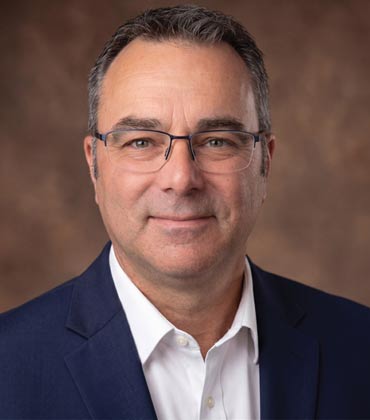
Donovan Quebedeaux
Donovan Quebedeaux began his career in engineering, working in the oil and gas industry in South Louisiana. Witnessing frontline safety risks firsthand, he pivoted to occupational health and compliance. Since 2013, he has served as Director of Safety, Health & Sustainability for ISC Constructors, overseeing safety programs protecting more than 2,000 associates across Gulf Coast and Midwest operations.
Through this article, Quebedeaux presents a grounded perspective on Environment, Health and Safety (EHS) leadership, where safety is shaped less by mandates and more by mindset. He highlights the importance of building a culture rooted in care, recognizing risks that extend beyond the jobsite and applying technology with intent. At its core, his approach reinforces that people, experience and consistent leadership drive adequate safety at every level.
AT A GLANCE:
Safety as a Culture, Not Compliance – Moving beyond OSHA requirements to build a culture rooted in care, where safety is driven by mindset, leadership commitment and accountability at every level.
Managing Risk Beyond the Jobsite – Recognizing overlooked environmental risks such as silt runoff and addressing them as both ecological and on-site safety priorities through consistent control and oversight.
Technology with Purpose – Evaluating new tools, including AI, through real-world pilots to ensure they improve outcomes, enhance efficiency and do not add unnecessary administrative burden.
Experience Shapes Effective Leadership – Building EHS capability through field application, behavioral understanding and engagement—not just training.
Building a Strong Safety Culture: Caring for People beyond Compliance
Safety for us is not built around a single initiative; it reflects how work is approached each day. We are not talking about machines. We are talking about people. That distinction shapes how safety is handled on site.
“For us, the goal is not to adopt technology for its own sake, but to make the work more effective without losing sight of what matters on the ground.”
Building a strong safety culture is not easy. It begins with top management and extends throughout the organization, anchored by a clear expectation that no one cuts corners. Our people are our greatest asset. That responsibility guides how we operate every day.
The Occupational Safety and Health Administration (OSHA) sets a baseline. We don’t work safely just because OSHA requires it. We do it because we care about our people. When that mindset takes hold, safety becomes embedded in daily actions and decisions.
Environmental Risks in Construction: Managing Silt Runoff and Site Safety
One of the most underestimated environmental risks in construction is silt runoff. It is often treated as a required component of the job, installed at the start of a project and then left behind as work progresses. Over time, those controls can deteriorate or fall into disrepair. From what I have seen firsthand, when runoff is not managed properly, it can move beyond the project boundary, travel through streams and tributaries and affect surrounding waterways and biodiversity.
There is also a safety dimension. Poor soil and water management create heavy, muddy site conditions. Those conditions increase the risk of slips, trips and falls. Managing silt and overall site conditions is part of maintaining a safe place to work. More consistent attention and follow-through can make a meaningful difference, environmentally and from a safety perspective.
Emerging Technologies: Using AI with Caution and Purpose
AI has become a key part of the conversation. As a member of the Verdantix Safety Council, I have seen the topic surface repeatedly and it is clear the industry is paying attention. It looks like an incredible tool. At the same time, there is hesitation. The technology continues to evolve, and its limitations must be understood as it develops.
We are already using AI to support new processes and documentation. The speed makes a real difference. Tasks that once required significant time can now be completed far more efficiently. Even over the last few months, progress has been noticeable across multiple areas of the business. The technology is being applied at different levels, and its capabilities continue to expand.
There is a sense that we are still at the beginning. AI is advancing quickly and will become a more powerful tool over time. The priority, however, is practical use—improving how work gets done while remaining clear about its limitations.
Advice for Upcoming EHS Leaders: Learning through Field Experience
Safety professionals usually start with one or two certifications, and sometimes a degree in the field. That is a great place to start. It gives a solid foundation and a clear sense of direction. From there, progress comes from putting that knowledge into practice.
Work quickly moves beyond tests and certifications. The focus shifts to applying what you know in day-to-day situations. On-site, the role involves dealing with people who bring different behaviors and challenges. Handling those situations is where understanding begins to take shape.
Experience is built through doing the work. Applying knowledge in real situations, making decisions and managing interactions all contribute to that process. Over time, that is how confidence develops and how the learning continues.