
Thank you for Subscribing to Environmental Business Review Weekly Brief


 George Vilanakis, Inventor & Founder
A car breaks down on an unlit road late at night. The driver reaches into the emergency kit for a flashlight that has been unused since the vehicle was purchased. One click. Nothing. Another attempt and still no light. The batteries have run flat. At the very moment the equipment is needed, years of emergency preparedness come down to whether someone remembered to check, recharge or replace the batteries.
H2OnlyBattery approaches this problem by changing when emergency power is generated.
Its founder, Greek inventor and entrepreneur George Vilanakis, began exploring alternative ways to generate electricity in the late 1990s, experimenting with energy-generating devices that eventually led to the development of proprietary galvanic-cell technology. Completed in 2009 and patented in 2013, the invention replaces dependence on stored batteries with the ability to generate electricity on demand.
The galvanic cells remain inactive during storage and begin producing electrical energy only when activated with water or another suitable liquid, including urine in extreme survival circumstances. The liquid acts as an activator for the electrochemical process, enabling controlled reactions among the cell materials and thereby initiating electricity generation within seconds. The liquid itself is not the energy source.
When sealed in its original airtight packaging, the technology can remain inactive and ready for use for a very long period. However, once the user opens and activates the product, its long-term preservation depends on thorough drying and proper storage in a dry environment. Rather than storing electricity for years, the focus is on maintaining the ability to produce energy on demand, anytime, anywhere.
Our objective was never simply to create another battery. We wanted to rethink emergency energy itself, to preserve the capability to produce energy and activate it only when it is truly needed. And when that moment comes, we want people to be able to use it as simply and reliably as possible.
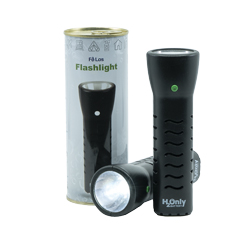
This philosophy guided more than nine years of commercial presence and continuous product development. One of the established products is the FL-103/U emergency flashlight, offering up to 80 hours of operation per wetting and 1,500 hours in total. Approximately 150,000 flashlights have been sold to date, bringing the technology into the hands of enterprise facility operators, municipal first responders and defence organisations, giving them one less uncertainty to face when an emergency strikes.
“Our objective was never simply to create another battery. We wanted to rethink emergency energy itself, to preserve the capability to produce energy and activate it only when it is truly needed,” says Vilanakis. “And when that moment comes, we want people to be able to use it as simply and reliably as possible.”
Engineered to Stay Ready with Low Maintenance
When every second matters, knowing how to operate the technology should be the least complicated part of the response. H2OnlyBattery removes complexity with a simple-to-use design. Its physical energy-routing system delivers electricity directly from the activated galvanic cells to the high-efficiency LEDs. By minimising electronic components, mechanisms and operating steps, the minimalist architecture reduces potential failure points while making activation straightforward for anyone using the equipment.
His commitment to simplicity also shaped the emergency flashlight kit, patented in 2018. Although the galvanic cells require only water or another suitable liquid for activation, finding water during an emergency could become another challenge. Vilanakis addressed it by integrating a water capsule into the flashlight’s packaging. Users simply open the kit and press the flashlight against the capsule to break it, triggering electricity generation within seconds. With water already available inside the kit, obtaining light requires no separate search for an activation source.
The technology also supports modular reusability through systems such as the PEB-2026 Portable Emergency Lighting System, available in 5W and 10W configurations. Published specifications for the 5W version indicate up to eight hours of operation per wetting and up to 400 hours of total core life, depending on operating conditions. Its replaceable energy-producing core allows the lighting assembly to remain in use after the core is depleted, reducing the need for complete equipment replacement.
Sustainable Innovation Through Longer-Use Products
Beyond operational reliability, H2OnlyBattery delivers compelling environmental benefits for organisations seeking to reduce disposable-battery consumption and improve the sustainability of their emergency equipment.
 Unlike many conventional battery designs, H2OnlyBattery’s cells do not require prefilled liquid electrolytes during storage. The company uses recyclable raw materials, while repeated activation and replaceable energy-producing components help reduce dependence on disposable batteries.
These design choices can lower the volume of discarded batteries and extend the useful life of emergency-lighting equipment. H2OnlyBattery estimates that a comparable conventional flashlight would require approximately 233 batteries to match the same operating duration, illustrating potential savings in replacement purchases and associated battery waste.
“With every conventional battery eliminated, we take another step towards reducing the environmental impact of everyday energy consumption and creating a greener future,” says Vilanakis.
Scaling Towards the 72-Hour Emergency Window
Beyond emergency flashlights, H2OnlyBattery’s galvanic-cell technology can support applications such as decorative lighting and portable radios. Its next ambition is more demanding, providing essential power for lighting and communications during prolonged emergencies.
That direction is taking shape through discussions with German civil-protection organisations.
Feedback from these organisations highlighted a need for dependable lighting and communication support during prolonged emergencies. According to Vilanakis, some existing arrangements provide approximately 20 to 24 hours of lighting when response teams may require support for much longer. Europe’s Preparedness Union Strategy reinforces this concern by encouraging at least 72 hours of self-sufficiency for the population during crises.
-
With every conventional battery eliminated, we take another step towards reducing the environmental impact of everyday energy consumption and creating a greener future.
H2OnlyBattery is addressing this requirement through its Physical Energy Routing System – 72 Hours of Critical Energy, a portable platform that extends the company’s water-activated technology beyond individual lighting devices.
Built around a suitcase-sized configuration, the proposed system is intended to provide emergency lighting and support essential mobile-device charging and communications without relying on grid power or fuel-powered generators. Vilanakis describes a lighting design target of 72 hours and the ability to charge up to 20 mobile devices.
 Development and testing in Germany are helping translate this concept into a practical portable energy system. Research and engineering work focuses on improving energy output, evaluating system performance and establishing the technology’s suitability for larger emergency applications.
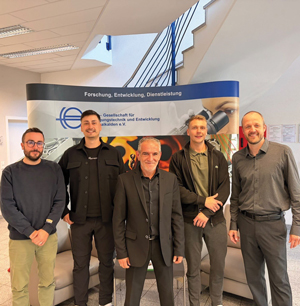
The technology is gaining momentum through Germany’s get started 2gether 2026 programme in Thuringia. The portable emergency-energy project, built on H2OnlyBattery’s proprietary technology and system architecture, was selected for the programme and receives related state development support. German partner Adreniba Trading UG / WaterLamp is working with research institution GFE Schmalkalden e.V., which supports prototype development, testing, measurement and performance validation. Vilanakis’s recent visit to GFE formed part of this ongoing engineering collaboration.
H2OnlyBattery is also investing in modernising and automating its manufacturing facilities in Greece, preparing for higher production volumes and international expansion while retaining control over its proprietary technology.
The next engineering priorities include increasing cell output, reducing system size and extending power delivery to devices beyond lighting. These improvements could expand the technology’s relevance for civil protection and defence organisations that need accessible energy for essential equipment during extended disruptions.
Recognised as Emergency Lighting Solution of the Year in Europe 2026 by Environmental Business Review Europe, H2OnlyBattery is extending its water-activated technology from individual flashlights towards larger critical-energy systems. Its guiding principle remains unchanged. Energy should wait until it is needed. And when it is needed, access to it should be as simple and reliable as possible.
