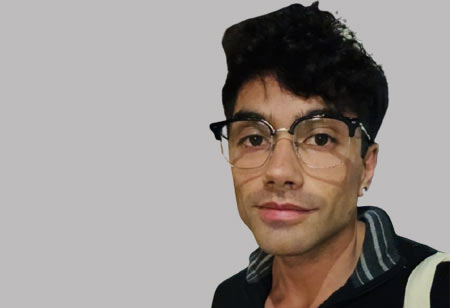
Raymond Saucedo is the Environment, Health, and Safety Manager at AbiMar Foods, Inc., focused on building safety culture, regulatory compliance, and environmental stewardship. He promotes practical sustainability, workforce engagement, and measurable impact through everyday actions that protect employees, communities, and future generations.
This article is based on an interview between Environmental Business Review and Raymond Saucedo. It explores his perspectives on environmental stewardship, workplace safety culture, regulatory compliance, and building sustainable impact through leadership, employee engagement, and practical, everyday actions in today’s evolving industrial and environmental landscape.
Understanding the Human Impact of Operational Decisions
Environmental, health, and safety (EHS) are imperative in our day-to-day lives. From professional endeavors to personal time, there is rarely a moment when EHS is not influencing us in some way, shape, or form. Whether we recognize it consciously or not, the quality of the air we breathe, the water we drink, and the environments in which we work and relax are all shaped by EHS principles and decisions.
My experience with EHS began in manufacturing when I was 19 years old, where I saw firsthand the impact an industrial plant could have on both the environment and individual well-being. I witnessed how operational decisions, sometimes made for efficiency or cost, could directly affect employee safety, community health, and environmental quality. What began as exposure quickly became a passion, along with a desire to push myself and my teams to find ways to create sustainability and longevity across every aspect of this field.
From Compliance to Culture: Building Sustainable Safety Mindsets
Within that realization lies what I believe to be one of the greatest accomplishments an EHS professional can achieve: building strong teams and fostering a culture that prioritizes the totality of environmental, health, and safety. Compliance is essential, but culture is transformative. When safety and environmental responsibility become part of how people think, act, and make decisions—rather than boxes to check—organizations begin to see lasting results. When leadership provides buy-in and individuals develop an intrinsic desire to improve these aspects of life for everyone, an EHS program doesn’t just exist; it flourishes.
Meaningful change does not always begin with massive initiatives. It often starts with consistent, everyday decisions multiplied across organizations and communities.
Much of our day-to-day work in EHS focuses on ensuring that companies meet regulatory requirements and maintain compliance with governing bodies. These responsibilities are critical, but the true fulfillment of EHS work extends well beyond regulations and audits. It comes from spreading the understanding that our business operations do not merely affect a company’s net worth or reputation, but also the world we are shaping for future generations. Every operational improvement, safety enhancement, or environmental initiative carries ripple effects that extend far beyond the facility gates.
Making Environmental Stewardship Personal and Actionable
When explaining the importance of environmental stewardship and safety culture, I often guide new hires through a series of simple questions:
1. Do you enjoy spending time with family and friends at a park flying kites, playing on the playground, or having a picnic?
2. Does anyone here enjoy fishing, hunting, or hiking?
3. Has anyone ever stepped outside just to take a breath of fresh air?
More often than not, I receive a few head nods or verbal responses, which I genuinely appreciate. My response is always the same: whether you realize it or not, you depend on a clean, healthy environment to enjoy these moments. To deprive future generations of that same opportunity would be a disservice, if not a crime against humanity. This perspective helps shift EHS from an abstract corporate concept into something deeply personal and universally relatable.
Collective Impact Through Everyday Decisions
From there, we explore how individual actions can create meaningful and measurable impact. One of my favorite examples is intentionally simple. If one person drinks one bottle of water per day and recycles it, assuming the bottle weighs 10 grams, over the course of 30 years that individual prevents approximately 15,600 grams of plastic from entering a landfill. That equates to roughly 34 pounds and 6.27 ounces of plastic.
Now imagine a city of 100,000 people adopting this same habit. That collective effort would keep approximately 1,560,000,000 grams, or 3,439,211 pounds and 4.6 ounces, of plastic out of our waste stream. And that number only grows as more people adopt the practice. This example illustrates a powerful truth within EHS: meaningful change does not always begin with massive initiatives. It often starts with consistent, everyday decisions multiplied across organizations and communities.
When people can see the numbers, understand the scale, and connect the impact to activities they enjoy outside of work, the message resonates more deeply. I have found that this approach fosters stronger alignment with an organization’s EHS mission and reinforces the idea that EHS is not simply a department or a compliance function. It is a shared responsibility, a leadership mindset, and a long-term investment in people, communities, and the planet.
Ultimately, EHS is about protecting what matters most— today and for generations to come. When organizations fully embrace that responsibility, they don’t just reduce risk; they Raymond Saucedo create value that endures.