Biodegradable Trash Services

Biodegradable trash services help communities and businesses manage organic waste through collection, composting support, responsible disposal and landfill diversion. With a focus on service consistency, waste separation, environmental compliance and sustainability outcomes, they support cleaner properties and more responsible waste management.

Green Garbology: Engineering Trash Room Flow to Prevent Risk Before It Starts
Green Garbology
Engineering Trash Room Flow to Prevent Risk Before It Starts
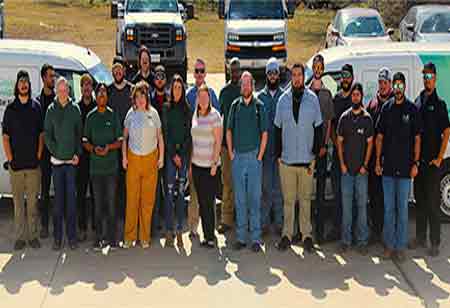
Braedyn Inmon, Owner and Operator
“In many buildings, waste management begins and ends with the selling of equipment or cleaning services. Often missed are how waste moves through a building, where it slows, where it fails and how those failures can lead to odor, pest issues, equipment strain and fire risk,” says Braedyn Inmon, owner and operator of Green Garbology.

Biodegradable Trash Service: Redefining Waste Management through Sustainable Practices

Biodegradable trash services represent a focused shift within the waste management sector, centered on handling organic and compostable materials in ways that align with natural decomposition processes. Rather than treating waste as a uniform stream destined for disposal, these services distinguish between material types, emphasizing the recovery and reintegration of biodegradable matter into ecological cycles.

Rethinking Waste Streams through Biodegradable Service Models

Waste management often gets treated as a reactive service. Something smells, a chute jams, a compactor fails, a trash room becomes a problem and only then does someone step in. That pattern misses a larger issue. In dense residential and mixed-use properties, waste systems are operational infrastructure. When they are poorly designed, badly maintained or treated as an afterthought, they create risks that extend beyond cleanliness into compliance, labor strain, equipment failure and even fire exposure.

The Power of Waste - Maximizing its potential through innovative fuel cell technology
Bloom Energy
The Power of Waste - Maximizing its potential through innovative fuel cell technology
Ivor Castelino, Energy Transition Leader - Biogas and Carbon Capture

Humans generate an incredible amount of waste - nearly 2 billion metric tons a year - and that number is expected to grow by 70 percent by 2050. To make matters worse, two-thirds of human-generated methane emissions come from waste. Methane is a potent greenhouse gas, with 25 times more warming potential than carbon dioxide. Dealing with our waste effectively is critical for the long-term survival of humanity.

Waste Collection Contracts Shift as Property Owners Look for Biodegradable Alternatives

Thursday, July 02, 2026

Waste collection contracts are starting to include a new requirement that would have been unusual a few years ago. Property owners and facility operators increasingly want trash services that can handle biodegradable materials separately from conventional waste streams, creating new expectations for service providers that historically focused on hauling and disposal. The change is less about environmental branding and more about practical waste management decisions. Buildings, campuses and mixed-use developments are generating larger volumes of food scraps, landscaping debris and compostable packaging. Sending those materials through standard disposal routes can undermine broader waste reduction targets and complicate reporting obligations that some customers have begun to adopt internally. Biodegradable trash services sit at the center of this shift because collection practices often need to change before diversion goals can be met. Containers may need different handling procedures. Pickup schedules can differ from ordinary refuse collection because organic material breaks down quickly and creates sanitation concerns if left unattended. Disposal networks also become more complicated when material must be directed toward composting or other processing facilities. That has created a different competitive environment for service providers. Collection companies are no longer judged solely on pickup reliability or pricing. Buyers increasingly ask whether providers can manage separate waste streams and support changing disposal requirements across multiple properties. The transition also introduces new procurement questions. Property managers that operate large portfolios often prefer standardized service agreements. Biodegradable waste programs can make standardization difficult because collection requirements vary by location and by the type of waste being generated. A restaurant district and an office campus may produce entirely different organic waste profiles even if they sit within the same municipality. Service providers are responding by reassessing routing models and customer engagement practices. Collection schedules that work for ordinary refuse may not be suitable for biodegradable materials that require more frequent handling. Customer education has also become a larger part of service delivery because contamination can reduce the usefulness of collected material and create additional processing costs. Another consequence is that waste services are becoming more integrated into broader facility management discussions. Decisions about janitorial practices, food service operations and tenant engagement can influence whether biodegradable collection programs succeed or fail. The hauling contract increasingly touches functions that traditionally sat outside the waste department. The growth of biodegradable trash services does not guarantee a uniform market direction. Processing infrastructure differs widely from one area to another, and customer expectations remain uneven. Some organizations are pursuing extensive diversion programs while others are still evaluating whether separate collection systems justify the added complexity. Even so, biodegradable waste handling has moved beyond a niche service category. For waste providers and commercial customers alike, the discussion is increasingly about how collection practices need to adapt when disposal expectations begin to change.

Food Waste Separation Turns Biodegradable Collection Into a Workplace Issue

Thursday, July 02, 2026

The expansion of biodegradable trash services is creating an unexpected pressure point inside commercial properties. The success of these programs often depends less on trucks and disposal facilities than on whether employees, tenants and visitors separate waste correctly. It is possible to provide special containers and change the schedule, but the problems with biodegradable trash usually arise when it gets mixed with regular garbage. It becomes difficult to process and handle such waste, thus turning disposal service into an issue of workplace behavior. Office buildings illustrate the challenge. Employees may encounter different waste instructions at home, in public spaces and in the workplace. A biodegradable collection system requires consistent participation from people who often have varying levels of familiarity with waste separation practices. The burden of making the system work can fall on building management teams that already oversee numerous services across a property. Food service environments face another complication. Cafeterias and dining areas generate large amounts of organic material, yet they also produce packaging and other items that can easily end up in the wrong containers. Collection providers may need to spend more time helping customers understand disposal procedures because incorrect sorting can affect the quality of the material being collected. This creates a different relationship between waste companies and customers. Traditional waste collection often operates in the background and receives attention only when service fails. Biodegradable programs require more interaction because ongoing participation shapes the effectiveness of the service. Property managers are also discovering that waste separation has operational consequences. Cleaning teams may need revised procedures. Container placement becomes more important because convenience can influence disposal behavior. Internal communications often play a larger role than expected, particularly in facilities with high employee turnover or multiple tenant groups. The issue is especially relevant for organizations that occupy several locations. A company may want a consistent waste program across its footprint, yet local conditions and workforce practices can produce very different results from one facility to another. A biodegradable collection strategy that functions well in one office may require substantial adjustments elsewhere. Service providers increasingly have to account for these human factors when designing programs. The quality of collection outcomes depends on more than transportation and disposal capacity. Program performance can be shaped by employee routines, building layouts and the practical realities of daily operations. Biodegradable trash services are often discussed in terms of environmental outcomes or disposal methods. Another interpretation is emerging. These services are also exercises in behavior management and workplace coordination, requiring participation from people who may never consider themselves part of a waste management program. That dynamic could influence how biodegradable services are marketed and delivered in the coming years. Collection providers may find that education and customer support become nearly as important as the mechanics of hauling material away.

Infrastructure Gaps Complicate the Expansion of Biodegradable Trash Services

Thursday, July 02, 2026

Interest in biodegradable trash services is growing, yet the ability to deliver those services remains uneven because collection is only one part of the equation. Organic material still needs somewhere to go after it leaves a property, and that requirement is exposing infrastructure gaps across many markets. The challenge is easy to overlook. Separate collection containers and dedicated pickup routes create the appearance of a complete program. In practice, biodegradable waste handling depends on a chain of activities that extends beyond the point of collection. Processing capacity, transportation distances and local disposal options all influence whether a service can function efficiently. This creates difficult decisions for waste companies considering expansion. A provider may identify demand from commercial customers but still face limitations if suitable processing destinations are not available nearby. Longer transportation routes can increase costs and reduce the practicality of offering specialized collection services in certain locations. Commercial customers encounter their own complications. Organizations that operate across several regions may expect comparable waste services at every site. The availability of biodegradable collection can vary significantly, making it difficult to create a single approach to waste management. Procurement teams can end up managing different service models depending on local conditions. Infrastructure constraints also shape investment priorities. Waste providers may need to determine whether customer demand is strong enough to justify building additional capabilities or establishing new partnerships. Those decisions carry risk because demand for biodegradable services remains inconsistent across industries and geographic areas. The issue extends to contract expectations. Customers increasingly ask for services that support separate organic waste handling, but providers cannot always guarantee identical outcomes in every market. Service agreements may need to account for differences in processing options and collection logistics. Infrastructure limitations can also influence pricing discussions. Specialized collection systems often involve different routing requirements and handling procedures. Costs may vary considerably depending on the distance between collection points and processing destinations. Buyers that assume biodegradable services will operate like conventional waste collection may underestimate the complexity involved. None of this suggests that biodegradable trash services lack momentum. Interest from property owners and commercial operators continues to create opportunities for new service offerings. The challenge is that demand can develop more quickly than the supporting infrastructure needed to sustain it. That imbalance may become one of the defining issues in this segment of the waste industry. Collection providers, property owners and procurement teams are increasingly learning that biodegradable waste programs depend on networks that extend far beyond the loading area behind a building. The long-term direction of biodegradable trash services may ultimately depend less on customer interest than on whether processing capacity and collection networks develop at a pace that can support broader adoption.

Biodegradable Trash Services Info

Q1
What Do Biodegradable Trash Services Do for Properties and Organizations?
Biodegradable trash services help properties, institutions and commercial sites handle waste with cleaning, deodorizing, collection support and material choices that reduce reliance on harsher chemicals or conventional plastic products. Top Biodegradable Trash Services often focus on trash rooms, bins, chutes, shared disposal areas and waste handling routines where odor, residue and resident complaints can build quickly. The work is practical: keep disposal areas cleaner, easier to use and less difficult for staff to monitor between service visits.
Q2
What Solutions Are Usually Included in Biodegradable Trash Services?
Service scope can include biodegradable cleaning agents, odor control, bin washing, chute sanitation, compostable liner guidance, waste-room upkeep and scheduled maintenance. Top Biodegradable Trash Services should also explain what happens before, during and after service, because a missed cleaning cycle can leave staff dealing with pest issues, blocked access and repeated complaints. Strong providers set clear service intervals, match products to the site and document recurring trouble spots.
Q3
Why Is Demand Rising for Biodegradable Trash Services?
Demand is rising because owners, facility teams and communities are under pressure to cut waste impact without making daily trash handling harder. Top Biodegradable Trash Services fit that need when they combine practical site care with lower-impact products, clearer routines and better documentation. Many buildings already struggle with odors, overflow and limited staff time. The category is gaining attention as sustainability goals move from policy statements into the ordinary places where waste is stored, cleaned and removed.
Q4
How Are Top Biodegradable Trash Services Selected?
Top Biodegradable Trash Services are selected by looking at service consistency, product suitability, safety practices, documentation, response time and how well providers understand real waste areas. Decision-makers should walk a provider through a busy trash room or chute area and ask how it would handle odors, residue, spills, blocked access and follow-up after the first visit. A proposal should make service frequency, materials used and accountability easy to compare.
Q5
What Value Do Biodegradable Trash Service Providers Create?
Clean, well-maintained waste areas affect tenant experience, staff workload and property reputation. Top Biodegradable Trash Services create value by reducing avoidable service calls, making trash areas easier to inspect and limiting the use of products that may conflict with sustainability goals. Poor routines can turn a small odor problem into extra labor, complaints and emergency cleaning. For property teams, the value is often seen in fewer recurring issues and clearer expectations for everyone using the disposal area.
Q6
What Role Do Expertise and Technology Play in Biodegradable Waste Handling?
Expertise matters because trash systems vary by building type, volume, layout, ventilation and user behavior. Top Biodegradable Trash Services may use site assessments, service records, product matching, equipment knowledge and scheduling tools to keep waste areas manageable. Technology should support the work rather than add another dashboard people ignore. The best use of tools is simple: track what was serviced, flag patterns and help teams address trouble before it becomes a larger maintenance problem.