Thank you for Subscribing to Environmental Business Review Weekly Brief
Environmental Business Review: Specials Magazine
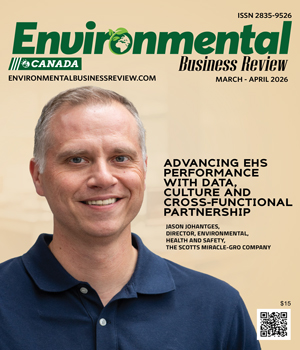
Jason Johantges began his career as an engineer for a construction project management company, where he was responsible for overseeing environmental, health and safety compliance on construction job sites. Enjoying the inspections, training and development of safety and environmental systems, he chose to pursue a dedicated path in EHS. He went onto work for corporations building EHS programs before joining Scotts Miracle-Gro in 2008. Starting with Scottslawn Service, the company’s at-home lawn care division, he has since worked with every business unit from sales, supply chain, R&D, Centers of Excellence and Hydroponics group. These experiences led to his current role leading the Field Operations EHS team, which supports the sales, supply chain, R&D and distribution organizations. Collaborative Regulatory Vigilance We have a great team from our Centers of Excellence, Legal, Risk and field EHS teams that regularly review releases, go to webinars or in-person conferences and utilize both free and paid subscriptions that help keep us informed of the evolving environmental and regulatory expectations. We all share information and help make decisions on if and how we need to comply with regulatory changes. It’s a great cross-functional team that stays engaged with one another. Measuring Proactive Tech Impact Determining whether a new EHS technology meaningfully improves outcomes or simply adds complexity is not easy to quantify. We gave key performance indicators (KPI’s) that focus on proactive actions and things we can control. When we introduce new technologies, we measure their impact on one of the key indicators aligned with the technology adopted. We do not, yet, have a technology specific KPI. I’d love to hear from anyone that has created and adopted one. We are fortunate to have an EHS Technology and Data Analytics team, who are exploring similar opportunities for KPI’s.
Top Electronics Recycling & E-Waste Services in Canada 2026
How does ERS International structure global electronics recovery with security and lifecycle control? For more than two decades, ERS International has operated with a disciplined commitment: recover more value, protect data rigorously, and document every material flow from collection through final reintegration. Positioned at the intersection of electronics recycling and IT asset disposition (ITAD), ERS delivers vertically integrated lifecycle control — unifying transport, serialized tracking, refurbishment, resale, secure data destruction, material recovery, and carbon quantification within a single operational framework. From regional programs to Fortune 500 and Fortune 1000 enterprises across North America, South America, Europe, and the Middle East, ERS supports organizations requiring regulatory defensibility, a verified chain of custody, and measurable ESG performance. Retailers rely on documented product destruction that protects brand integrity. Financial institutions mandate witnessed data destruction under strict supervision. Enterprise IT firms require serialized tracking, controlled resale, and audit-ready reporting aligned with Scope 3 reduction strategies. Enterprise-Grade Security and Data Protection Architecture What security architecture ensures compliant data destruction and chain of custody? Security and transparency anchor each engagement. ERS operates under ISO 27001 and R2v3 standards, ensuring enterprise-grade information security management and compliant processing protocols. Data sanitization is performed using Blancco software within dedicated secure facilities, generating serialized wipe certificates and audit-ready documentation. Chain of custody remains uninterrupted from collection through final disposition. For major banks across Canada and the U.S, ERS deploys mobile shredding units to process thousands of hard drives onsite, often under direct client supervision. Laptops received without drives are refurbished and resold with documentation that preserves the full chain of custody from origin to final disposition. “We are always progressing and improving how commodities are recovered and reintroduced into the supply chain,” says Joseph Cimorelli, COO. .

Hazardous Waste Management

The land looked perfect on paper—eight acres tucked near the city of Mobile in Alabama, quiet and green under a big Southern sky. For the developers who bought the property, it was a blank canvas ready to become something bold: a celebration arena for Mardi Gras and a float barn. But beneath the surface lay a complication no one had planned for. What looked like solid ground was mostly wetlands—jurisdictional, federally protected, and deeply entwined in a web of environmental law. The result? Plans stalled, permits froze, and the project stood on the edge of becoming a very expensive mistake. Then came the call to Ephriam & Associates Environmental Consulting, a comprehensive environmental consulting firm specializing in technical and ecological site assessments. With its expertise, the firm traced every hydrological connection and assembled many pieces of the puzzle through extensive technical analysis, scientific data, and close coordination with relevant agencies to finally reach a shared understanding. It found no ecological link between the site and any protected waters—meaning the wetlands weren’t jurisdictional under federal rules. The conclusion? Not jurisdictional. Not a deal-breaker. The project moved forward, and the original vision remained intact. “Environmental regulations, protections, and conservation policies are ever-evolving. Our company seeks to stay abreast of these changes, and we aim to advise our clients on how to conserve the environment while providing solutions that allow their projects to move forward,” says Troy L. Ephriam, founder and CEO of Ephriam & Associates Environmental Consulting. This is just one of many examples where Ephriam & Associates has found the intersection where progress and environmental protection can coexist. Science Over Speculation Founded by Troy L. Ephriam, a former environmental regulator with the U.S. Army Corps and a past mayor, the company has carved out a critical niche in the environmental consulting space. Its clientele includes government agencies, municipalities, engineers, planners, and developers, for whom it crafts compliance strategies and secures critical permits from local, state, and federal agencies. Its work is rooted in the mandates of the National Environmental Policy Act (NEPA), Section 404 of the Clean Water Act, and Section 10 of the Rivers and Harbors Act. The firm assesses everything from wetland impacts and water quality to threatened species and cultural resources. “At the end of the day, we help clients find balance—between what they want to build and what’s actually permissible within environmental law,” says Ephriam.
WasteLinq is transforming hazardous waste management into a fully connected ecosystem like never before. By bringing together generators, service providers and disposal facilities, it replaces outdated silos with a living network where decisions happen in real time, data speaks across every touchpoint and visibility becomes a baseline expectation. The platform began as an internal solution for Co-founder and CRO Sean Easton, who originally built it to streamline operations at his own company, Effective Environmental. From profile approvals to coordination with treatment, storage and disposal facilities, Easton and his team managed it all, setting a new operational standard for the industry. “We never set out to build a software company,” Easton says. “We just needed a smarter way to manage the work. Over time, it became very clear that the entire industry did too.” While many generators still rely on email chains, service providers juggle spreadsheets and disposal facilities operate in isolation, WasteLinq offers a unified alternative. It bridges silos, accelerates approvals, reduces redundant data entry and restores visibility across the entire waste chain. Each implementation begins with a close look at how a team works, not just their data but the flow, the people and the daily pressure points. The WasteLinq team often visits sites, studies workflows and helps configure the system to match real needs. While the software isn’t custom-built, its flexibility allows users to tailor it without added complexity. That level of alignment has translated into real operational gains. Clients report completing 50 percent more of the same work than they could using previous manual processes. A key contributor to that efficiency is OneProfile, a solution to one of the industry’s biggest bottlenecks, profile creation and approval. Trained on hundreds of thousands of historical profiles, the system generates a preliminary waste profile from just a few user inputs, which can then be reviewed and edited. From there, disposal options appear automatically, along with associated vendor costs and timelines. Once selected, the system completes all necessary documentation, including entries into external Disposal Facility portals, making the profile ready for submission in minutes. Clients have cut profile creation time in half and reduced average approval times by over 30 percent.
Top Waste Management Solution in Canada 2026

In an industry often defined by complexity, rigid processes, and slow response times, AC Waste Services was built on a simple but uncommon principle: one call solves all. Founded in 2015, the company was created to address a growing frustration shared by property managers, multi-unit operators, franchise groups, and national brands—fragmented service, inconsistent pricing, unclear invoicing, and delayed issue resolution across regions. AC Waste Services exists to remove that friction entirely. Operating as a national waste and recycling brokerage, the company manages waste, recycling, organics, and equipment financing programs across Canada while supporting U.S. locations when needed. Services include vendor sourcing and management, invoice auditing, service optimization, equipment coordination, in-house financing, sustainability consulting, and ongoing operational support. Rather than acting as a passive intermediary, AC Waste Services takes full ownership of the waste ecosystem on behalf of its clients.
CXO INSIGHTS
Detecting a Cleaner Future with Emerging Air Quality Technology
Terence Trefiak, Senior Consultant, Montrose Environmental Group
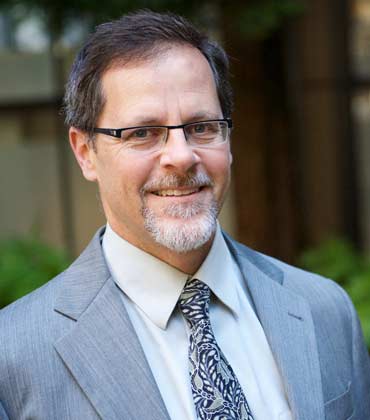
The importance of Climate Tech and AI in Driving Sustainability Transformation
Jeff Caton, Vice President, Director of Climate and Sustainability Services, Environmental Science Associates
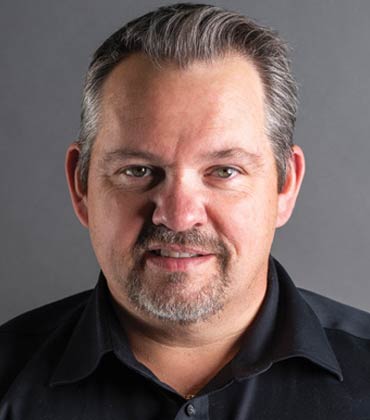
Mastering Sustainable Packaging
Barry Fraser, Culinary and Business Solutions Specialist, Gordon Food Service - Canada

Transforming Business for a Better Planet
Titilope Bukunmi-Omidiran, Global Environmental, Social and Governance (ESG) Manager, Hunter Amenities International Ltd
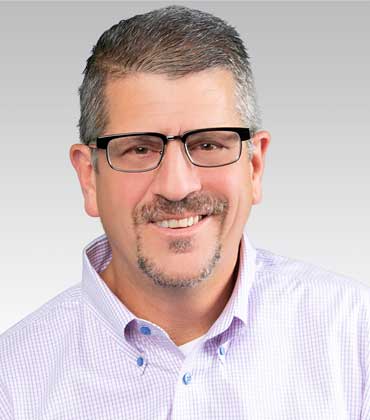
Building Predictable EHS Performance Through Engineering Control and Leadership
Marty Stern, Vice President, Global EHS, Colgate-Palmolive


IN FOCUS
Empowering a Greener Canada: The Rise of E-Waste Recycling Services
Canada’s electronics recycling sector is evolving through regulatory pressure, corporate sustainability priorities, and circular economy momentum, driving stronger demand for responsible e-waste services.
Soil Remediation: Bridging Environmental Needs and Solutions In Canada
Soil remediation in Canada raises land value through its ability to fulfill environmental requirements while promoting sustainable business growth.
EDITORIAL
Advancing Responsible Electronics Recycling Leadership
The rapid acceleration of digital technologies has reshaped how organizations operate, communicate, and innovate. However, this growth has also intensified the global challenge of managing electronic waste responsibly. Responsible e-waste management is a priority rather than a peripheral compliance obligation. Organizations today must balance operational efficiency with environmental accountability while navigating evolving regulatory expectations. Effective recycling systems, secure data destruction, and transparent material recovery processes have become essential components of sustainable operations.
Recognized among the Top Electronics Recycling & E-Waste Services in Canada 2026, ERS International has demonstrated a consistent commitment to responsible electronics recycling and environmental compliance. The company has established itself as a trusted partner for organizations seeking secure and environmentally responsible disposal of electronic equipment. Through disciplined operational practices and adherence to rigorous environmental standards, ERS International supports businesses in managing obsolete technology while protecting sensitive data and recovering valuable materials.
This issue also presents valuable leadership perspectives from industry experts shaping sustainability practices within their organizations. Lexie Bullock, Manager of Environmental Compliance Programs – Central at Air Canada, discusses the importance of strong compliance frameworks in advancing environmental responsibility across complex operational networks. Complementing this perspective, Titilope Omidiran (PhD), Global Environmental Social and Governance manager at Hunter Amenities, highlights how ESG leadership can guide organizations toward measurable sustainability outcomes and long-term environmental stewardship.
As organizations confront growing environmental responsibilities, effective electronics recycling will remain a central component of sustainable operations. Companies like ERS International demonstrate how disciplined processes and environmental accountability can create meaningful impact within the recycling sector. Their recognition reflects a commitment to responsible technology lifecycle management and industry leadership. The insights shared by Lexie Bullock and Titilope Omidiran further underscore the importance of governance and strategic vision in advancing sustainability goals.
Together, these perspectives illustrate how environmental progress is achieved through collaboration, leadership, and operational integrity. We invite our readers to explore the stories and insights presented in this issue. By engaging with these ideas, organizations can better understand the strategies shaping the future of responsible electronics recycling and sustainable resource management.
