Thank you for Subscribing to Environmental Business Review Weekly Brief
Environmental Business Review: Specials Magazine
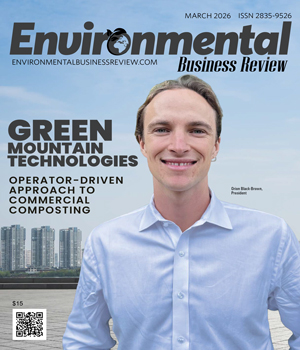
What operational challenges define modern commercial composting facilities? Commercial composting operations often face complex site constraints; feedstock variability, regulatory requirements, and community sensitivity all determine whether a facility succeeds or risks operational disruption. Addressing these realities requires technology and support grounded in experience, practical evaluation, and long-term operational support. Since 1992, Green Mountain Technologies (GMT) has worked with customers to navigate these challenges by designing composting solutions for real-world operating conditions. Organizations turn to GMT for their cutting-edge technology and depth of experience planning, building, and operating composting facilities. Nearly all of GMT’s work comes through referrals, reflecting an approach in which customer success is inseparable from the company’s own. GMT takes a technology-agnostic approach, guiding customers toward composting solutions that align with their land constraints, operating environment, and budget. Their product line includes aerated static pile (ASP) systems, membrane compost covers, In-vessel composting solutions, and a variety of tractor powered turning equipment. “At the end of the day we are a mission driven company, focused on removing barriers to composting infrastructure. Our focus is on creating financially and environmentally sustainable composting operations that last for decades, not short-term sales,” says Orion Black-Brown, president.
Top Indoor Air Quality Services 2026
For organizations that operate in environments affected by asbestos, mold, and indoor air quality requirements, the core responsibility is ensuring workers are cleared, documented, and ready before work begins. While compliance is often structured around annual requirements, it is frequently managed in pieces. That fragmentation becomes visible before a worker ever steps into a facility, when training, medical clearance, fit testing, certification, licensing, and documentation must align to allow mobilization. In practice, these processes rarely occur in one place, and delays often surface when schedules tighten, and work is ready to begin, but clearance is incomplete. Future Environment Designs exists to keep workers continuously ready for regulated work. With nearly four decades in operation, the company is a full-time training provider for firms operating in hazardous environments. Its wraparound services ensure workers leave cleared, documented, and ready to return directly to the job. Rather than acting as a one-time vendor, it functions as an ongoing partner, bringing instruction, respirator fit testing, medical coordination, documentation management, and regulatory guidance into a single, continuous process. “It’s rarely the work itself that creates risk. The challenge is keeping training, clearance, and documentation aligned so mobilization isn’t delayed. Our role is to keep those requirements together so people can leave training cleared and return straight to the job,” says Angelo Garcia, III, CIEC, CEOP, Principal-Industrial Hygienist. Future Environment Designs works with a broad mix of institutional, industrial, and contracting organizations that are accountable for maintaining compliance in active facilities. Its clients include large institutional operators like PSE&G, National Grid, and Brookhaven National Laboratory, as well as environmental consultants, abatement contractors, restoration firms, and demolition companies. For these organizations, the company focuses on preparing workers, supervisors, consultants, and assessors to operate safely and legally during maintenance, renovation, and demolition activities involving regulated materials. Training focuses on identifying and controlling asbestos and indoor air quality risks in real operating conditions..

Advanced Wastewater Treatment Technology

Most wastewater systems work well—at first. Standard solutions are built for predictable conditions, designed to meet baseline compliance and throughput. But in the real world, not every plant operates the same way. Variables like influent quality, flow rates, operational priorities, and regulatory pressures shift constantly. Off-the-shelf systems and rigid designs can’t adapt fast enough. Plants end up stuck—modifying equipment, creating workarounds, and fighting uphill battles to stay compliant and productive. That’s where Clean Water Technology, Inc. (CWT) stands apart. As a global leader in engineering and manufacturing for wastewater treatment, the company builds solutions flexible enough to integrate into any treatment plan, regardless of complexity or changing conditions. Its systems are not confined to a single mode of operation—flexibility is built into their foundation, allowing them to evolve with shifting processes, regulatory requirements, and business needs. Whether adapting to new load profiles, scaling production, or meeting tighter discharge limits, CWT solutions adjust without the need for costly retrofits or operational compromises. Instead of working against change, the technology works with it—keeping productivity high, compliance straightforward, and operations focused on what matters most. “We’re not here to sell you a new pump. We’re here to make your plant work better—with smarter processes, better integration, and modern tech that transforms what you already have into something far more efficient,” says Ariel Lechter, CEO and president. Patented Technology That Raises the Bar The company has transformed the wastewater industry with its patented technologies. Backed by significant investment in research and development, these solutions are engineered to meet the demands of any wastewater application—from primary systems and advanced anaerobic systems to complete, end-to-end treatment solutions. The flagship innovation—the Gas Energy Mixing (GEM) System—is a proprietary solution that provides a distinct edge over conventional methods. Before the GEM System, wastewater treatment relied on Dissolved Air Flotation (DAF), which uses a large tank and a bed of bubbles and chemical additives to float low-density particles. The GEM System takes a completely different approach, using hydrocyclone technology instead of conventional flotation. In a large tank, a DAF adds air at the very end of the process to float particles that are attached only by the collision method. In the GEM System, air is dissolved into 100 percent of the waste stream, generating true nanobubbles that attach to the floc. All separation occurs inside the vortex motion in the hydrocyclone. By the time the water leaves the hydrocyclone and enters the tank, the solids and liquids are separated. In a much smaller tank the floc is then skimmed from the surface, delivering superior results. The GEM System allows for higher efficiency in chemical use, has a smaller footprint, and produces drier sludge. Though the system has been on the market for over 20 years, it has been continuously improved and remains best in class. The product excels in primary treatment, offering scalability for flow and loading—key factors in wastewater management. Its adaptability makes it ideal for modern factories that need systems to grow with them, while also reducing chemical consumption and operational costs. In secondary wastewater treatment, CWT stands out as one of the few companies to develop an Expanded Granular Sludge Bed (EGSB) system tailored for smaller-scale use. While most major engineering firms only deploy EGSBs for large projects, CWT’s EGSB can handle lower flows at costs that are within the budgets of small companies—making the technology accessible to a broader range of facilities. CWT was also the first to bring the “Swingmill” to market—a dual screw press that dewaters sludge and is self-cleaning. This dual benefit reduces the amount of sludge while reducing downtime and maintenance. These innovations highlight how CWT stays ahead of the curve and continues to push the industry forward. Support Beyond the System Along with advanced systems, the company provides a range of support services designed to give customers clarity and confidence at every stage. These include lab reports, system demonstrations, and access to online training courses. Operators can receive specialized training through CWT’s digital learning platform to ensure proper system use and maintenance. It also maintains an in-house laboratory, where customers regularly send samples for ongoing analysis and performance optimization.
CXO INSIGHTS

Real Estates Role in Decarbonization: A System Approach
Peter Killeen, Senior Sustainable Operations Manager, JLL

Redefining Sustainability through Leadership and Action
Alana Spencer, Co-Founder and Managing Partner, Alma Environmental Partners

Transforming Freight Transportation through Sustainable Innovation
John Lovenburg, Vice President, Environment and Sustainability, BNSF Railway

Lead Testing in Schools: A Study in Planning Ahead for Compliance
Sophie James, Vice President, Water Quality & Environmental Affairs, California Water Service

How Telematics Can Make Equipment More Productive
Christina Andrews, Senior Content Marketing Manager, United Rentals


IN FOCUS
Navigating the Evolving Landscape of Indoor Air Quality Services
Indoor air quality services grow through health awareness, stricter regulations, and innovative technology adoption, improving environments in homes, workplaces, and public spaces.
Organic Waste Reimagined: Commercial Composting as a Sustainable Solution
Commercial composting solutions enhance sustainability through advanced processing, technology integration, shared infrastructure, and high-quality compost production that supports circular resource systems.
EDITORIAL
Disciplined Systems Driving Measurable Environmental Performance
In this edition, Environmental Business Review examines how disciplined execution aligns compliance, infrastructure and measurable outcomes before operational risk materializes.
Recognized as Top Indoor Air Quality Services 2026, Future Environment Designs, Inc. addresses the persistent industry vulnerability of fragmented compliance processes that delay mobilization. As detailed in its profile, the company integrates training, respirator fit testing, medical coordination, certification and documentation into a single operating model. Its “At Your Convenience” structure keeps workers continuously cleared and documented, reducing disruption in regulated environments. With nearly four decades of experience and long-standing client relationships, the firm’s value lies in keeping clearance, renewal timelines and regulatory guidance aligned so work begins without delay.
Green Mountain Technologies, named Top Commercial Composting Solutions 2026, demonstrates how disciplined planning determines whether composting facilities operate successfully or face shutdown risk. It combines consulting and technology under a dual-division structure that guides clients from permitting through implementation and one year of operational support. Its technology-agnostic approach evaluates site constraints, community sensitivity and regulatory requirements before system selection. The successful odor mitigation redesign for Grimm’s Fuel illustrates how practical assessment and engineered controls protect both operations and community trust.
This issue’s CXO perspectives reinforce the importance of data and execution. Christina Andrews, Content Senior Content Marketing Manager at United Rentals, explains how telematics integrated with fleet management software provides real-time visibility into utilization, maintenance and budgeting, enabling contractors to protect capital and reduce downtime. Alana Spencer, Co-Founder and Managing Partner at Alma Environmental Partners, emphasizes embedding sustainability into daily operations through structured data alignment, while highlighting AI, embodied carbon and circular economy strategies as the next frontier.
Together, these leaders demonstrate that environmental progress is achieved through structured systems, measurable oversight and sustained engagement. We invite readers to explore the full features and insights shaping the industry’s next phase of disciplined, performance-driven growth.
